Unicoi Outfitters is north Georgia's premier guide service and fly fishing outfitter, located on the Chattahoochee River near alpine Helen. Look for fishing reports, gear and book reviews, and general musings here from our staff and guides.

Wednesday, February 10, 2021

Dropshotting for Deepwater Denizens

Here's Hunter with a quick video breakdown of the dropshot style rig we use for nymphing in high/heavy flows.

https://www.facebook.com/watch/?v=234528114811298

This technique allows you to use more split shot than normal without the stress of breaking off an entire rig if it catches bottom, and creates a slightly different presentation of the flies in the water.

Got any questions? Send us a message or give one of our shops a call and we’ll help you out.

Monday, February 8, 2021

Rainbow Romance

Tis the season for “rainbow romance.”  Research by GAWRD and UGA in the 1980’s revealed that north Georgia rainbow trout spawn from mid-December through March, but the greatest activity occurred from mid-February to mid-March.

Use this intel to your advantage. First, think of travel routes as big bows migrate toward clean spawning gravels. Second, don’t pass up the skinny water in your haste toward the deep pools. Third, consider egg and nymph patterns as you make your drifts through those shaded runs and riffles.


If you see a redd, with or without paired fish over it, go around it. That oval of polished gravel might hold the next generation of trophies for you.  But you probably won’t, as those redds are scattered up and down our clean headwater streams and, after one rain, are hard to spot.  Plus, research in the Southeast has shown that floods and droughts are the main factors affecting wild rainbow trout populations in our headwater streams.  


When you hook a brute, fight it carefully.

Here are a few tips, based on my own experience while recreating  and while snatching invaluable DNR broodfish in a past chapter of life:

  1. Stay below it if possible. Let the fish fight both you and the current. Sprint below it if you have to.
  2. Let the fish win the first round (run) and expel its nervous energy. Don’t clamp down on your drag.
  3. Fight it sidearm (!!!) and eventually steer it where you want it to go.
  4. Patience wins title fights. The fish will tell you when you have the upper hand when it tires and lets you start turning it.
  5. Keep your legs together during a close fight. Don’t let a wide stance look like a woody escape tunnel.
  6. Hide your net til the end. As the trophy allows you to bring it close, finally lift its head toward the surface and surprise it with a tennis-swipe, headfirst, into the net. 
  7. Keep the netted fish in the water while you ready your camera or holler for your friend. “Keepfishwet” is your first priority!  A quick pic or two is secondary.
  8. Release it quickly, then rest on the streambank to celebrate your victory.


For more tips on hunting and landing big fish, peruse “secrets of the Rabunites” and the great columns at Troutbitten.com.  


https://rabuntu.org/about/educational-programs/secrets/


https://troutbitten.com/2019/06/30/fighting-big-fish-keep-em-down/


Give us a call at the shop (706-878-3083) for the latest intel, and remember to SIDEARM during your epic battle.  Good luck during this season of rainbow romance!

Friday, February 5, 2021

UO Fishing Report - 2/5/21


Summary: We saw low, clear, and cold water last week, with the trout action slow for most traditional anglers. However, a few folks who were flexible actually had good days.


The weather forecast is up and down, with some snow even possible tomorrow night at high elevations. Again, watch the weather and road conditions, and pick a warm afternoon for your best social distancing escape to the mountains. We have some intel about recent Delayed Harvest redosings, too.


Wes’ weekly hot fly list includes split case BWO nymph, Micro Mayfky nymph, , trout crack, fire eggs, and the muddy buddy streamer.  Other folks had luck on small soft hackle hares ears, peach eggs, mops, and especially copper johns.   Due to some late news  today, I’ll add squirmy worms and small woolly buggers to the list.  Details are in the angler reports that follow.


Headwaters

Small streams have been slow due to the cold. You’ll do more fishing than catching, and any players will likely take your deep nymph instead of your dry fly.


Delayed Harvest

Today’s  news is that GAWRD redosed  several waters this week, so have your eggs, squirmy  worms, and buggers ready.  Also go early, late, or on a weekday to avoid the weekend crowds. If you haven’t already, go to the GAWRD trout page and sign up for the agency’s weekly fishing reports and trout stocking lists. You might even notice some early walleye intel!


https://georgiawildlife.com/fishing/angler-resources


We had a couple good Chattooga DH reports. RonW said had a great trip last weekend, “The Trio hit "The River"  and had another stellar day.  We  easily caught 50+ fish among the three of us! Kurt tore them up all day and took the numbers honors, with Moe taking the big fish honor. Eggs weighted deep were the ticket all day long. I caught a few on the "Ronco Special" which was used as anchor to get the egg down fast.  Happy to see the Flybrary kicking on the kiosk.That makes my heart happy.


Water was cold, yeah I know I need to get a thermometer. I never let it deter me though. The colder the better! As little as I get to fish, I'll fish in any condition any chance I get.”


Jimmy met two friends in the parking lot yesterday and they distanced along the Chattooga DH. His two buddies fished traditionally, dredging eggs and nymphs in deep, slow pools.   They had slow catching days.   In contrast, Jimmy hit the riffles and had a banner day, despite water that only warmed  to 42 degrees. He said,  “When I first got on the river I was doing what we usually do in mid-winter; I was dredging the bottom in deep holes.  Fortunately, in the second spot I fished, my fly drifted out of the deep pool and into an adjacent shallow riffle where I hooked up with a rainbow.  That dim bulb in my brain brightened slightly and I started focusing only on the shallow riffles, 2 to 3 feet deep.  From then on I was consistently into fish for the next three hours.  I fished a Pat's Rubberlegs with a Copper John dropper with most fish coming on the Copper John.  At the end of the day, I had 16 rainbows, 3 browns, and probably another 6 long distance releases.  No split shot since the water was so shallow where I was fishing.”


Private Waters

UO guide Hunter gave this overview, “Private water fish seem to be predominantly looking for small natural bugs such as midges, soft hackles, and classic nymphs in the 16-20 size range depending on the fly. High water after rains has made fish willing to chase streamers and typical legs and eggs patterns while the water is up.  As soon as it drops, they key in on the small stuff again. Look for the sun to break through in the afternoon and be ready to fish midges or midge emergers like rs2’s and wd-40’s if some midges start popping off.”


UO guide Palmer checked in today: “I had a trip yesterday at the bend it’s was cold and slow. But if you could get a orange pearl soft hackle on their nose they would take it every time.”


That’s the latest news as we welcome February and its challenging fishing conditions. Dress warmly, watch the weather, water,  and road conditions, and be distant and safe. Give the fly shop a call if we can help you further. Good luck!

Wednesday, February 3, 2021

Classic Winter Standbys

Classic Winter Standbys

by Jake Darling

Unicoi Outfitters

Winter trout angling can be very productive for anglers willing to brave the elements. During this time of year, many anglers have put away their tackle, waiting on warmer days of spring to venture back on the water. The truth is, winter in Georgia is one of the best times of the year to be on the water for trout fishermen, as angling pressure is at its lowest, and fish are still feeding during the warmer hours of the day. One thing many anglers struggle with is fly selection:  sure, most biomass found in rivers during colder months is often smaller and darker, but there is more to the story than just that. Understanding available food for trout during the winter will help you have more successful days on the water. 

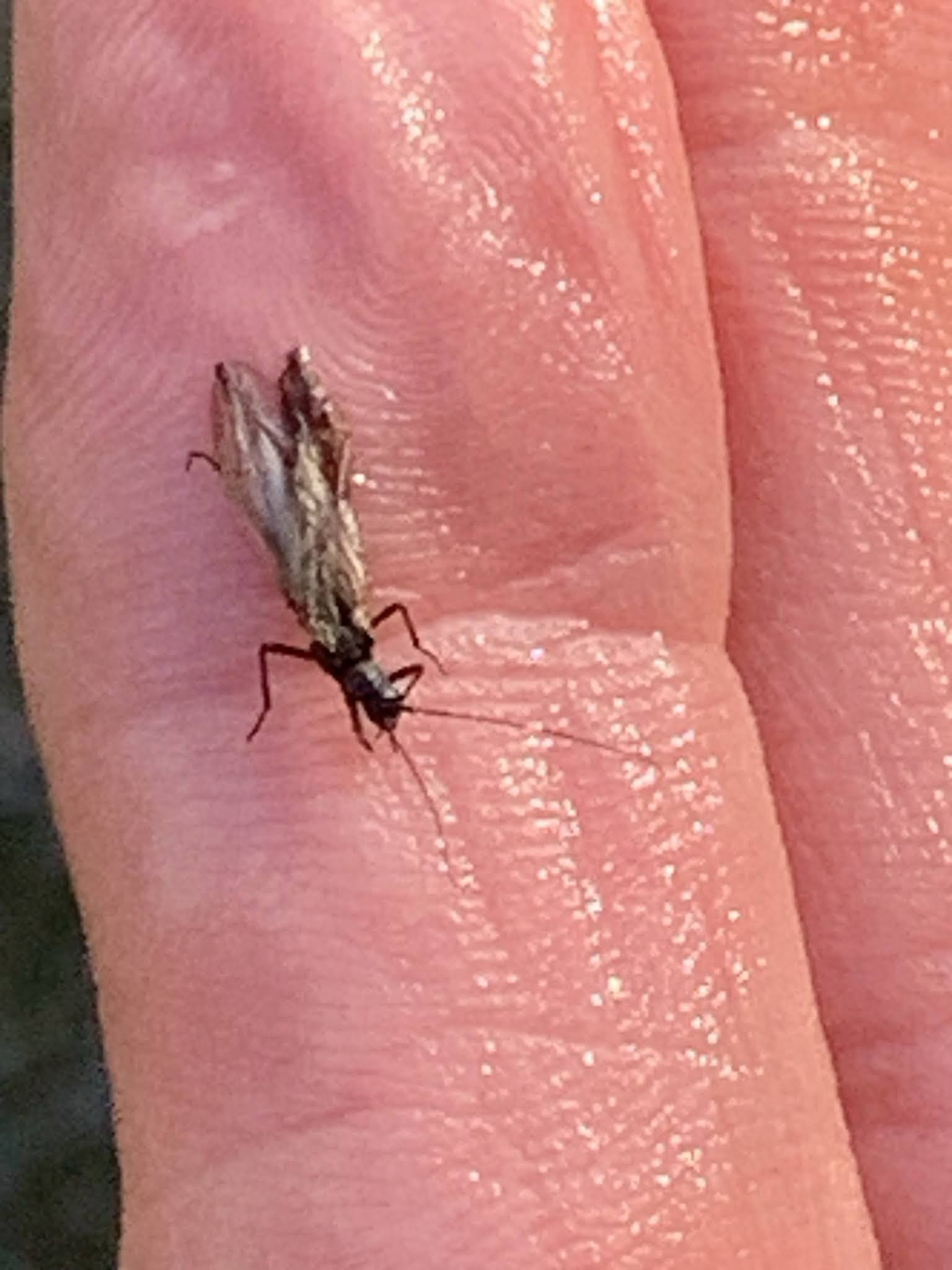
The Little Black Stonefly hatch is probably one of the best-kept secrets in north Georgia during the winter. Often these insects are very small, dark, and are hard to be seen flying in the air. One of the best ways to notice when these bugs are hatching is seeing them crawling on your waders or clothing. When they are active, fish gorge themselves on these bugs. There are many different patterns to mimic the Little Black Stones, but I like to keep it simple. Some of my favorite patterns would include Black Lightning Bugs, Black Copper Johns, Black Pheasant Tails, and Black Hares Ears (all in sizes 14-18).

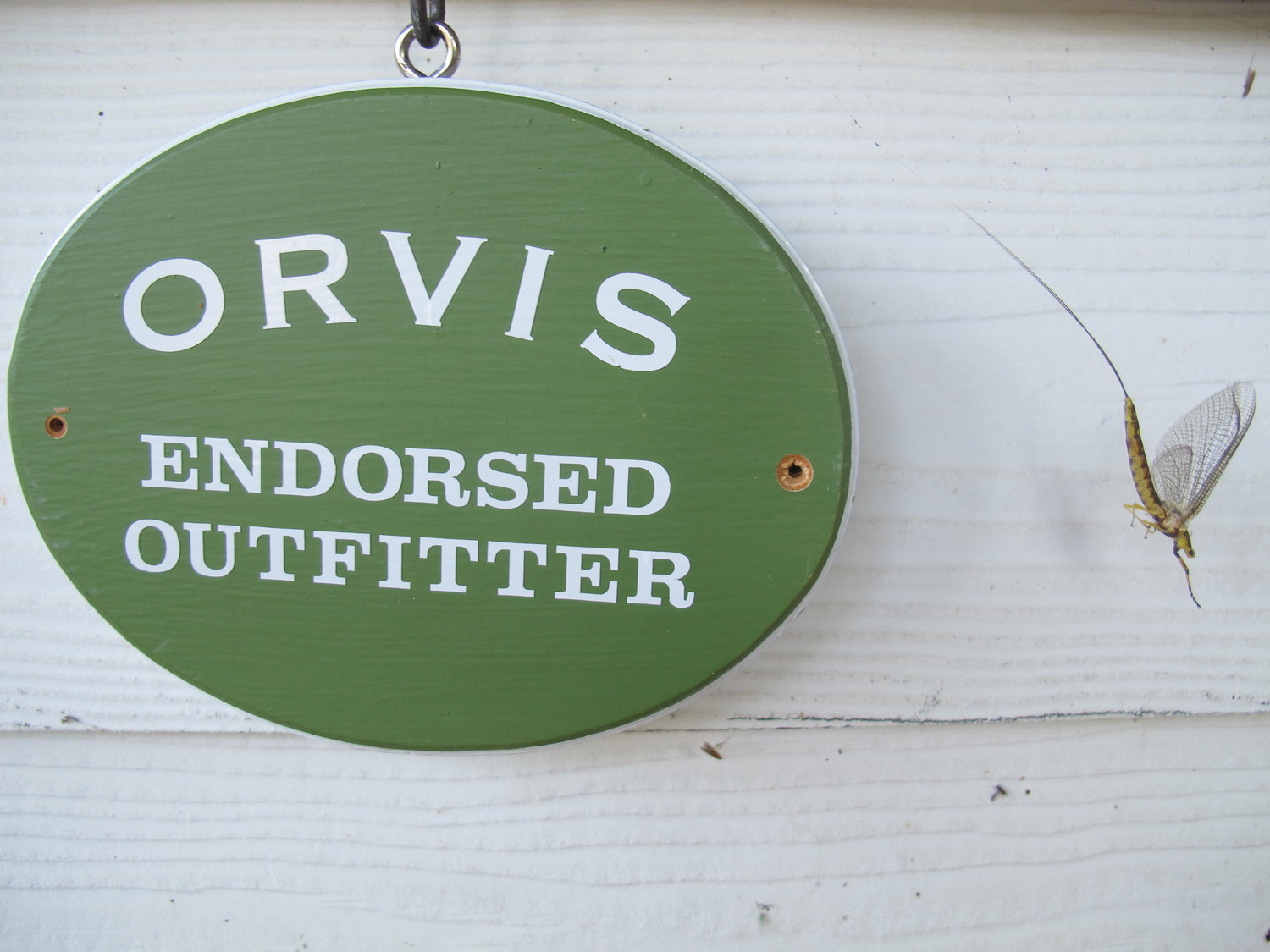
If you turn over a rock this time of year, chances are you will see small dark-colored mayfly nymphs crawling on the underside of the rock. Typically, these are small Blue Winged Olive nymphs. These insects can be found in almost all trout streams across north Georgia during February, and just because you don’t see adults flying around doesn’t mean the fish aren’t eating the nymphs below the surface. Try patterns such as Olive Pheasant Tails, Split Case (BWO), and Mighty May Sloan Baetis nymphs, all in sizes 16-20. 

Another strong player during the colder months is an assortment of small midges. Many days, swarms can be seen dancing around near the water’s surface and can often be tough to mimic with flies. Usually, I keep it simple with my midge selection, and often I will pass on the single fish rising to midges as these fish can be very hard to fool. Having said that, there are many fish on or near the bottom of the stream that will often not pass up a small midge larvae. Of course, a heavy hitter would be the Black Zebra Midge, but some of our favorites around the area include a Root Beer Midge, Diamond Midge, and Evenson’s 2be Midge Larva in Black. These insects are much smaller, so you will want to drop down to sizes 18-22. 

February offers up some great fishing for anglers willing to get on the water. Dress for success and be sure to carry plenty of split shot to get your offerings down to where the fish are hiding. Typically, focus most of your angling time around the warmer portions of the day, this is when the fish are most active. Be sure to pack some of these patterns in your box and you will have everything you need for some successful time on the water!

Monday, February 1, 2021

The Rabunite Thermometer


As a professional fisheries biologist for more than three decades and an avid trouter for five, I’m convinced that water temperature is the most important environmental factor controlling the behavior of our cold-blooded quarry, mountain trout.  My hillbilly clan, the Rabunites (www.rabuntu.org) thinks so, too.  They developed their own, highly effective fishing thermometer.  Let me decipher it for you!


1)    Under 40 degrees and falling.  Rabunite definition: “watch the icebergs.” Interpretation: 40 degrees is your first key number.  Below it and our cold-blooded critters are frozen and getting even colder, so anglers should expect few strikes. But the air is clean, streams are uncrowded, and you’re just happy to get out of the house.  Fish 11AM to 3PM.

2)      <40, but rising: “bring hope.” Trout are acclimated to very cold water, but rising water temperature feels like a warming trend and can key a bit of feeding activity.

3)      40-45: “bring a net.”  Trout begin to stir, and they stir a bit more with each degree of warmth.  It’s a good time to dredge the bottom of deep, slow pools with egg, stonefly, and mayfly nymph patterns.

4)      45-50: “bring a net and a camera.” Action increases and really takes off when temperatures near the next key, the MAGICAL 50-degree mark!  Most action is still subsurface, but it can be consistent, especially when there is a warm spell that increases water temps several degrees.  Try drifted nymphs, but also give streamer-stripping a shot.

5)      50-55: “bring some dries, too.”  Early spring bugs start hatching and trout are all over the water column, wherever the groceries are.  They’re sipping nymphs in the drift and looking out for midday hatches of gray caddis and Quill Gordon and Blue Quill mayflies.  It’s a good time to consult online “hatch charts” to know which dry flies to carry.

6)      55-62: “bring a friend with a camera.”  In angler terms, It’s On!!!  Trout are ravenous and chowing down in bug buffet lines.  Again, watch those hatch charts and bring the right bugs.  You might catch a bunch, some big ones, or a bunch of big ones.  Bring a witness with good photography skills so you’ll both have lasting memories of your great trip!

7)      62-68: “bring supper and a flashlight.” Waters warm and clear as spring transitions to summer.  Daytime fishing is dead, but the last hour of daylight can be great.  We call it Dark30 and we won’t miss it, as both bugs and trout come up to play right before slap-dark!

8)      >68: “bring breakfast and an iceberg.”  Trout fishing is really over for the season.  Temps over 70 are often lethal to trout, especially if angling stress is added.  Streams are coldest in early mornings and you might have a brief shot at dawn, before the hot sun rises.


Put a $15 stream thermometer in your vest and save a copy of this article to your Iphone notes page.  Let the Rabunite thermometer guide you to trouting success in the new year.  Good luck!


Story credit: Coastal Angler Magazine- Atlanta edition

https://coastalanglermag.com/e-magazine/atlanta/


Friday, January 29, 2021

UO Fishing Report - January 29, 2021

Our winter weather pattern continues, as does hope for some angling success. At least it hasn’t been super-cold, with stream temperatures below 40 degrees. That would really curtail trout appetites. Monday night’s 2 inches of rain have already passed and streamflows have returned to normal. My midday stream tour today revealed normal flows, gin-clear water, and nervous fish when the sun is high above them. Saturday looks dry, Sunday will be soggy, and the weekdays are dry until Thursday night. Overall, we have some decent chances to escape and distance ourselves for a mental health afternoon in the woods or on the water.

Our winter fishing pattern continues, too. Dredge deep for trout, especially if it’s cold, and be on the lookout for winter hatches on warm afternoons. Squint to see the tiny winter stones, blue wing olives, and midges in slow seams and eddies. Go slow, study the stream, and let the fish, bugs, and your stream thermometer prescribe your setup. Then rig your rod on a sunny streambank. Aim for smaller bugs right now. If it’s really cold, don’t shy away from some Euronymphing. Just pack a colored sighter, some extra 6x tippet, and a half dozen tungsten Euronymphs in your pocket. Remember that this bottom-dragging technique saved me from a slow day, as described in last week’s report. On the reservoir front, Henry brings us renewed hope, with fish found in open water and along the banks. The hot fly was his Something Else. See his latest report, below. Remember the extra intel in each weekly GAWRD blog, too: https://georgiawildlife.blog/category/fishing/
You’ll enjoy the “trout adventure story” link in today’s edition. Here’s this week’s hot fly list and our latest angler reports, as fresh as today! Hot Fly List Wes and Hunter’s hot fly list for this week includes: #10 brown and black rubberleg stones, #12 peach eggs, #16 black hares ear or black copper john, #18 root beer and trout crack midges, #18 pearl lightning bug, #20 gray RS2, and #20 WD40’s in gray, brown, or black. For Euro’s try:#14 walts worm, #16 red tag, and small (16-18) Frenchies and CDC pheasant tails. For dries, carry #16-20 Adams, #20 BWO’s, #18 black stones or caddis, and #22-24 cream and black midges. Headwaters Most headwaters have been a bit slow due to the colder temperatures. The best success has been on the bottom, so try a dry/ dropper rig, but expect few surface eats and use a longer tippet on your weighted prince or pheasant tail to get down to the bottom-huggers. Dukes has fished well for Smithgall reservation holders. Success there is always related to onstream experience. Clear water dictates 6x, tiny nymphs, and lightened reel drags. Dirty runoff allows for heavy tippets, big bugs, big nets, and a good camera!

Delayed Harvest
Low, cold, super-clear water continues to make Smith DH challenging. See last week’s tips for success there. The action picked up a bit with today’s sunshine, as new reporter “UGA Marty” checked in with this morning’s trip results: “Caught two on a squirmy worm from a deep hole where a pod of fish was stacked up. Also caught 2 on pink/orange eggs in semi-fast water just below a couple different pools. Had to leave at 1PM before the fish really started getting active. People were starting to pile into the parking lot when I left, but only 3 or 4 cars were there when I first arrived at 10. A couple of other guys said they had only caught 1 fish each.

On Smith, I’d also suggest that you pull out your “summer stealth” technique for those spooky fish in clear pools. Try a dry/dropper rig with a tiny nymph or midge on 2-3 feet of 6X or 7X tippet trailing the bushy dry. On flat pools, you might even sneak in above your targets, cast, and let your combo drift down to them.

The same “slow and deep” theme goes for Amicalola DH, where most anglers fish over the surviving salmonids, glued to the bottom in the deepest pools. A few years ago, Landon figured them out and shared his secret. See “A New Twist” here:
Bump the very deep pool bottoms and you might have a chance at Ami.


Athens Alan escaped to Chattooga DH last weekend and reported, “ The water was super-clear and gauge height was 1.9 and falling, the best level I have fished in a while. My feet were not really that cold while standing in 42-degree water. At least it was liquid and not solid.
There were some clouds of really small BWO’s at 11AM, but I saw no rises and kept dredging. I sat on the bank for lunch at 2PM and saw two rises. I quickly finished lunch and switched to a #16 parachute Adams and a #18 PMD, cast, and caught both fish! I stayed with the dries and caught 7 more fish by my 5 PM quitting time. I saw a few bugs but no real hatches through the afternoon.
It was a nice trip. I brought 11 to hand, with 9 of them on dries. It was great catching trout on dry flies on January 23rd!”

Here’s a brief midwinter tip: reservoirs are heat sinks and their tailwaters will typically run a few degrees warmer in winter than mountain streams, where icy air temps control stream temps. If dam discharges allow for safe fishing, keep the Unicoi (Smith), Blue Ridge, and Buford Dam tailwaters in mind for your winter excursions.

Private Waters
Our Hooch and Soque trips have gone fairly well for midwinter. Best flies remain a larger attractor (egg or stonefly) in front and a very small nymph dropper off the back. Guides have dropped down a tippet size when the water is low and clear. Some tiny droppers, like root beer midges and WD40’s, can save the day when fish get picky. Catching picks up around lunchtime as the sun hits the water.

Lanier
HenryC said, ”Lake Lanier action actually took an uptick this week. Fish were surfacing under birds in open water and on the bank. Most of this uptick was due to two factors: 1) lots of overcast/prefrontal weather and 2) the upside of the full moon. Once we get past the moon and sunny skies prevail I suspect we will go back to slower fishing. Catches of 3-8 per day were the norm. Fish were taken strictly on the somethin’ else fly. Both sinking and intermediate lines were the ticket depending on where we saw the fish (shallow or deep). Fish were also taken next to loons that were corralling threadfin shad. All in all, it was a surprisingly good week for the end of January.”
That’s the latest midwinter intel from our UO staff and fishing friends. Contact us if we can help you further with your hydrotherapy plans. Stay safe, distanced, and healthy. Good luck!

Friday, January 22, 2021

UO Fishing Report- January 22, 2021


Summary: Let’s label this report “winter hibernation.” Cold, cloudy days dampened last week’s success rates, while the few sunny afternoons warmed the waters, enhanced bug and trout activity, and boosted angler catches a bit. Going forward, let the weather be your guide. If you can, aim your trips for sunny, warmer afternoons. Forecasted air temps that exceed 50 degrees will push water temps into the mid-to-upper 40’s and enhance your hookup rates.

The weekend forecast is promising! Be on the lookout for midges, blue wing olives, and little black stoneflies, and be ready with those dry fly patterns. The best bugs for your nymph box right now are rubberleg stones, peach eggs, RS2’s, root beer midges, sexy Walts worms, and pheasant tails in both nymph and soft hackle forms. Lanier stripers are deep and very slow for flyfishers. Here are the latest reports from the field. Oh, and by the way, WES CAUGHT A MONSTER MUSKIE! Headwaters: Sautee just got home from an afternoon trip to his favorite blueline. He said it was a nice, warm afternoon of fishing. The catching, however, was slow, with one wild rainbow rising to his caddis dry and three more taking his bead-head pheasant tail dropper. Delayed Harvest: Smith Creek has fished slow, according to shop guests and web reports. Those cold, educated fish are spooky and picky right now in the low, clear water. Try a) a stealthy approach and b) a single, tiny nymph rolled along the bottom on 6X or 7X tippet. This is prime time for small (16-20) Euronymphs. Also, fish the places that most anglers pass over. Better yet, walk farther away from the parking lot and hit the logjams and overgrown runs, where casting is tough for rookies. Sautee and Dredger socially distanced at Chattooga DH during a cold and cloudy Tuesday. Water temp was probably about 40 at their noon start, and measured 44 at 4pm. It was cold and slow, but still fun. Sautee started off hot, with several nice rainbows immediately dredged from a deep pool on an olive/brown Pats rubberlegs. He cooled off suddenly and decided to end his game after only one hour on the field. A bit farther upstream, Dredger scored early in his game, with a small brown eating his Oreck egg. But that was his only score for the entire first half of the game. He did bounce the ball off the goal post when he saw the egg attached to the rainbow trout’s derrière instead of its lip, so that score did not count. The third quarter brought some hope. The sun peeked out at 2pm for 30 minutes and a scattering of blue wing olives hatched in front of him. Sporadic rises followed. He changed his game plan from indicator dredging to dry/dropper, with a #20 BWO dry trailed by a #20 pheasant tail. Alas, his confidence exceeded his ability, and he was shut out again. But he had captured some opponent addresses, so he changed his game plan for the fourth quarter. That was the charm, and he scored a half dozen rainbows on his Euronymphing rig to end his game on a high note. The hot bug was a #12 sexy Walt’s worm. Sautee offered these additional words of wisdom. First, a wading staff works much better if it’s not tucked into its holster. Second, don’t tip over horizontally in 40-degree water and fill your waders unless: 1) you have a change of clothes in the car, and 2) you're ready to call it a day. Private Waters: UO guide Hunter reports, “There has been plenty of midge activity on the Hooch when the sun comes out. Small soft hackles, RS2’s, and root beer midges were the ticket for Barry and Laurie on their Gilligan Special last Sunday. http://www.unicoioutfitters.com/product/gilligan-special/


UO guide Palmer reports, “We fished Nacoochee Bend one morning this week. It was pretty slow until the sun touched the water. I wouldn’t rush to be the first person to the stream in the mornings. The afternoons will produce the best bite as the water warms. I’m using a good bit of split shot with a stonefly imitation as the lead fly and something small dropped off the back. Soft hackle wets and midge patterns have been working well as my trailers.
Lanier HenryC reports, “Water temps are really starting to drop and we are seeing that temp drop relate to our striper fishing. Fish are not moving as much and appear to be heading deeper. The bait guys are still catching them but I suspect by month’s end we will need to wait til March to find any consistency in feeding fish. There’s probably another week left to put together a decent catch of stripers, spots, and largemouth. This winter was somewhat of a disappointment. With frequent fronts coming thru since mid-November, we had a few good outings but inconsistent success through this season. Oh well... spring will soon be upon us. Long live March's pre-spawn!” https://www.henrycowenflyfishing.com/


Memorable Road Trip For those of you who may only tune in on Fridays, here’s this week’s highlight. UO assistant manager Wes took a boat ride with awesome Virginia fishing guide and fly designer Blane Chocklett (@blanechocklettfishing). It was the ride of a lifetime. Wes’ fly-rod muskie stretched the tape north of 50 inches! We look forward to the full story when Wes gets resettled down here.

That’s the latest midwinter fishing intel from our gang at Unicoi Outfitters. Give us a call or stop by either store if we can lend a hand. Go slow, stay warm and safe, and follow the sunshine. Don’t forget that dry change of clothes tucked in the trunk, just in case.😉

Thursday, January 21, 2021

Our Top Three Winter Droppers

 What are your top three small nymphs to drop behind your big lead fly while winter dredging?


For many of us, a pheasant tail, hare’s ear, or prince nymph is a very popular trailer. Common sizes are 14-18, and maybe a few size 20’s on the pheasant tails. We like those first two patterns in natural and black colors. The trio are great imitators of the small clinging mayfly, stonefly, and caddisfly nymphs and larva that cover boulder bottoms. One good example is this mayfly nymph, probably a March Brown. Check out those gills working overtime in this live bug video!
We tossed three patterns into the crockpot to start this conversation. Lend a hand to the new flyfishers among us. What are your winter go-to’s?


Sunday, January 17, 2021

Fishing With Big Bugs

If you’ve ever wondered why a rubberleg stonefly nymph is a popular pattern these days, just use your net to dredge up a pack of decaying leaves and twigs from an eddy and sort through it. You’ll likely discover these big ole vegetarians in that brown buffet line.


And with a big profile and more calories than an itty bitty midge, stonefly nymphs will attract attention from the bigger fish in the pool. Stonefly nymphs- don’t leave home without them this winter and spring.
Call or come by Unicoi Outfitters (706-878-3083) if you need to restock your box.

Friday, January 15, 2021

Unicoi Outfitters Fishing Report - 1/15/21

www.unicoioutfitters.com

706-878-3083 Summary: It’s the middle of January and our fishing conditions are “low, slow, and chilly.” Streams are running low and clear. The good news is that they are not ice-cold, with rivers running in the 40-45 degree range. Those water temps give you a decent shot at some fish. Headwaters are running a few degrees lower and, with a few exceptions on warmer days, are a bit slower than mainstreams. As we’ve said before, match your flies to flows. Low and clear water suggests smaller eggs, rubberleg stones, or buggers as your first fly on 5x tippet. Then go tiny on the dropper, with a size 18 pheasant tail, hares ear, rainbow warrior, WD-40, or Frenchie trailed behind on 6x tippet. If the water is skinny, lighten up your indicator, too, or give Euronymphing a try. Keep an eye out in soft currents for hatching blue wing olives (#20) or little black stoneflies (#18). You might be pleasantly surprised by an hour of dry fly action on warm afternoons. If you don’t have a dry stonefly, grab a black or gray elk hair caddis, press down, and give it a mohawk haircut. The long, slim profile should fish well. Here is Wes’ weekly hot bug list: -Frenchies #16 and #18 -Black hares ear #16 -Slush eggs in pink and orange #12 -Gray RS2’s #20 Fresh angler reports follow on our longer Facebook edition. Good luck and put your health first if you go. Drive, hike, and wade carefully. And remember your best fishing friend every winter: the sun. Headwaters:

Sautee hit a White County blueline earlier this week and said: “My favorite rainbow stream produced well again. Fish were hunkered down with sub-50 degree air temps and there was no interest in my dry/strike indicator, unlike every other trip so far this year. Fish are certainly in winter mode. Nonetheless, it was a good day using a #16 tungsten bead head soft hackle hares ear. With fish hunkered down, the tungsten bead head was the key component in getting the fly down fast in front of hungry wild fish. In small stream fishing because of tight spaces due to overhanging rhododendron, you don’t always have the luxury of placing your fly far enough upstream of the spot where fish should be hanging out. That means getting your fly down in the water column quickly helps you produce more takes. Fishing is still good in high elevation, clear streams, but be in stealth mode with fast sinking flies to be most effective! “

Jimmy said: “Upon arriving at the Chattooga DH only to discover 17 other cars parked there and along the highway, Mark and I decided to go fish a beautiful, unnamed wild trout creek yesterday afternoon (14th). Considering we had bluebird skies and crystal clear water that was pretty chilly, the fishing was predictably slow. However, when you allow yourself to enjoy your surroundings, and you have it to yourself, you realize there are some things more important than "catching". The hookups we did have came on tungsten bead Prince Nymphs fished deep. “ DH: Smith has been hit or miss. Hits are by vets and misses are by rookies. Stealth, light tippets, and tiny bugs on the bottom are earning the higher batting averages. No recent reports on Tooga, except for the crowd found yesterday. It oughta fish the same as last week. Have an egg attractor within a foot of your split shot and drop a little pheasant tail 12-18” off the back. Consider putting a small tin split shot on the tippet between the two flies to get that dropper down, too. Try a #4 or 6 Dinsmore. Rabunites call this winter technique the “Dinsmore split.” Hunter tried the Ami and gave a truthful report:” Hey the newbies gotta know that even fishing guides have slow days, too! It was a tough Sunday on the Ami. Caught one in the first few minutes around 11:00 then nothing for the next few hours. Didn’t get a water temp for you though. The first one ate a black rubber leg stone. When the sun did manage to hit the water though there was a fair amount of midges coming off but no takers on any midge pattern in any life cycle form. Still good to be on the water though.” Smithgall:

RonW checked in: “Moe and I met up at Duke's on Saturday 1-10 to socially fishstance after snagging two spots the day before. We got into the fish almost immediately. A few on a tungsten BH CDC nymph. A few more came on the egg. We worked all the "passed up" water most of the day and it paid off big time. We spotted a few fish from up above the water and then went in and caught them, which is always super rewarding. The breakfast of champions was on the menu all day. biggest fish landed was 19" and few more in the 16-17" range. Great times as always on the water!”

Landon snatched a Wednesday no-show slot at lunchtime and reported:” Slow til about 3 when I had fished up to there. Then found ‘em wedged in a honey hole like cordwood. Broke off a couple, but landed quite a few in an hour there. Fly didn’t matter. They ate “5 shot and a good drift” in the deep pools. They were glued to the bottom and the ones I saw eat didn't move but a couple inches. Typical winter fishing.” Private waters:

UO manager Jake’s report: “Fished Nacoochee Bend on Sunday afternoon with new anglers, Sam and Brock. It was a cold day, but the fish became active once the sun was high in the sky. We were into fish consistently, but the highlight of the day was Brock’s big rainbow which had Hardman Heritage Trail hikers stopping to watch the battle. Brock’s big fish drug us up and down the river a few times, but he remembered his coaching lessons we covered during the beginning of his Gilligan Special and was able to get his trophy in the net. We landed fish on a variety of different patterns including Prince Nymphs, Soft Hackles, bigger stoneflies, and Rainbow Warriors.”
Stripers:

HenryC sez: “Stripers are eating a little better now. Both north and south lake are showing fish. Birds are helpful as are coves that are a tad warmer than the main lake or creek. Small flies are the ticket and early and late in the day is best with PM having a slight advantage. Look for fish under birds as well as in the backs of the creeks and coves.”
https://www.henrycowenflyfishing.com/ ‘21 Rendezvous canceled: All friends of the Rabunites should note that their annual winter shindig at Dillard House will take this year off to protect everyone’s health: https://www.facebook.com/rabuntu/ Good luck this week, whether you’re home perfecting your Oreck eggs, taking notes from Orvis podcasts, or carefully heading astream for some mental health maintenance. Call or come by the Helen or Clarkesville store if we can help you stay afloat in today’s turbulent times.

Tuesday, January 12, 2021

Inland Striper Intel!


Unicoi Outfitters congratulates young Tyson England on his video production skills and thanks him for sharing it with us. We now share it with all of you and hope it fires you up for your striper hunting adventures in the new year. Enjoy!

https://vimeo.com/499605259

We have Henry’s book, too. Just visit or call the shop at 706-878-3083 to get a copy, or you can order it online at Unicoioutfitters.com.
https://shoponline.unicoioutfitters.com/fly-fishing-for-freshwater-striped-bass-henry-cowe.html Good luck to all of our fellow striper stalkers. And thanks again to Tyson and his able assistant, @JoshEnglandPhotos for today’s great entertainment!

Saturday, January 9, 2021

Eggs Over Easy


Winter weekend brunch, anyone? May I suggest some eggs? Here’s my favorite recipe, and it doesn’t get any simpler. In fact, we Rabunites call it the Oreck Easy Egg. Here’s the page from our Rabuntu.org cookbook:

1. Cut an inch-long strip of light-colored (apricot or peach) egg yarn. Split it lengthwise to make two eggs. 2. Lay one strand on top of a #12 caddis hook; lash down at strand midpoint. 3. Pick both ends of the strand straight up and wind them together as the base of a parachute post. 4. Cut the yarn about 1/3 inch up from the base with an up-across-down motion of scissors. 5. The short para post should now splay out like a mushroom. 6. Glue the thread base. 7. Pop a red dot on top with a sharpie. You’re done; fish don’t know it’s just half an egg. 8. Tie a bunch and fish them deep as your lead fly during our egg season, December thru February.


Back story: the pattern came from the first young dude I mentored, 20+ years ago. He saw it on TV, tied it, and showed me. He was a machine and the Rabunites nicknamed him Oreck for his trout vacuuming skills. He’s now known as LineManDan and chases elk and cutts near Denver. We still love his egg!
Mentor a rookie. They just might end up teaching YOU a trick or two. And enjoy your January brunch! Call 706-878-3083 or swing by our Helen fly shop if you need more help with your winter tying & trouting menu.