Unicoi Outfitters is north Georgia's premier guide service and fly fishing outfitter, located on the Chattahoochee River near alpine Helen. Look for fishing reports, gear and book reviews, and general musings here from our staff and guides.

Tuesday, February 23, 2021

Assembling Your Combo - Part 2

Today Hunter's talking about reels!

The next component in your perfect setup to look at is the reel. There are a wide variety of reels on the market today, and there may be several that will work for your setup. The three aspects to pay attention to is the drag system, arbor size, and overall weight.


The drag system can be sealed, non-sealed, or a click pawl style which just uses a clicker mechanism as the drag system. For most all-around setups a drag system is preferred, a click pawl style can be beneficial when fishing small creeks with small fish which don’t pull drag. A sealed drag system is great for a low-maintenance set up whereas a non-sealed system can require occasional maintenance but are typically more budget-friendly.

The arbor size is the diameter of the spool, and this determines the size of the memory coils left in your line and the retrieval rate. Large arbor reels are popular for their ability to leave less noticeable memory in your line while providing a faster retrieval rate.

The third aspect, weight, can be a major factor in choosing a reel. The goal is to find a reel which balances the rod nicely, as a reel that is too light will leave you with a tip-heavy setup that can cause fatigue after casting all day.

So what is your favorite style of reel for your setup?

Hope these tips help, and as always, come by the shop, put some reels in your hand and see how they feel to you!

Monday, February 22, 2021

Assembling Your Flyfishing Combo - Part 1

Are you thinking about giving flyfishing a try? Hunter, our Clarkesville store manager, just wrote a brief series about selecting a flyfishing outfit. We are sharing it here for the benefit of our rookies and prospects. We’ll start with rods. Enjoy!

And thank you, Hunter.


What’s your perfect setup?

We get a lot of questions about what set up (rod/reel/line) someone should get. The answer is it really depends. Over the next few days we will be going over these key components and explaining what to look for when picking out a new setup for yourself. Today, it’s rods. So what rod should you get? Depends on how you like to fish.


To keep things simple, we’ll be talking about options for our local area. Let’s start with looking at length, this is probably the easiest to decide. 9 foot is the typical length you’ll want for most styles of fishing in the area. Some anglers prefer shorter rods on smaller, more overgrown creeks, something like a 7-8 foot rod on small creeks, all the way down to a 6-foot rod when blue lining.


What weight should you use? Depends on what you want to throw. A good size for most styles of fishing is a 5 weight rod. This will help turn over heavier nymph rigs, streamers, and the such and also allow you to land a dry fly delicately. Some prefer lighter weight rods if you are solely dry fly fishing very small creeks, or doing a technique called euro nymphing using a 10 foot 3 weight rod. A 5 weight rod will also allow you to do a little warm water fishing for bass and bream in the area during the summer with small poppers and streamers. If you are looking to fish primarily large streamers for trout or bass, and maybe even some large poppers in the summertime for bass, a rod in the 6-8 weight range will be best for you depending on the size of the fly you are looking to throw and the quarry you are chasing.

A third aspect that some overlook is the action or speed of the rod. This refers to how deep the rod flexes when being cast and how fast it returns to straight. A slower, or full to mid-flex rod will cast better with small lightweight flies or with short casts as this allows the rod to fully load up with the short amount of line being used on short casts, such as small mountain creeks. A faster action, or tip flex rod will cast better with large flies, large nymph rigs, or long distance as these rods take more weight to fully load the rod.

As always, there is more that could be discussed about rods, but this should help give you a basis for deciding what your perfect setup will be. Come by the shop, get some rods in hand and see how they feel to you and learn more about them.

Next up, Reels!

Bolo Bugs!

BOLO Bugs!

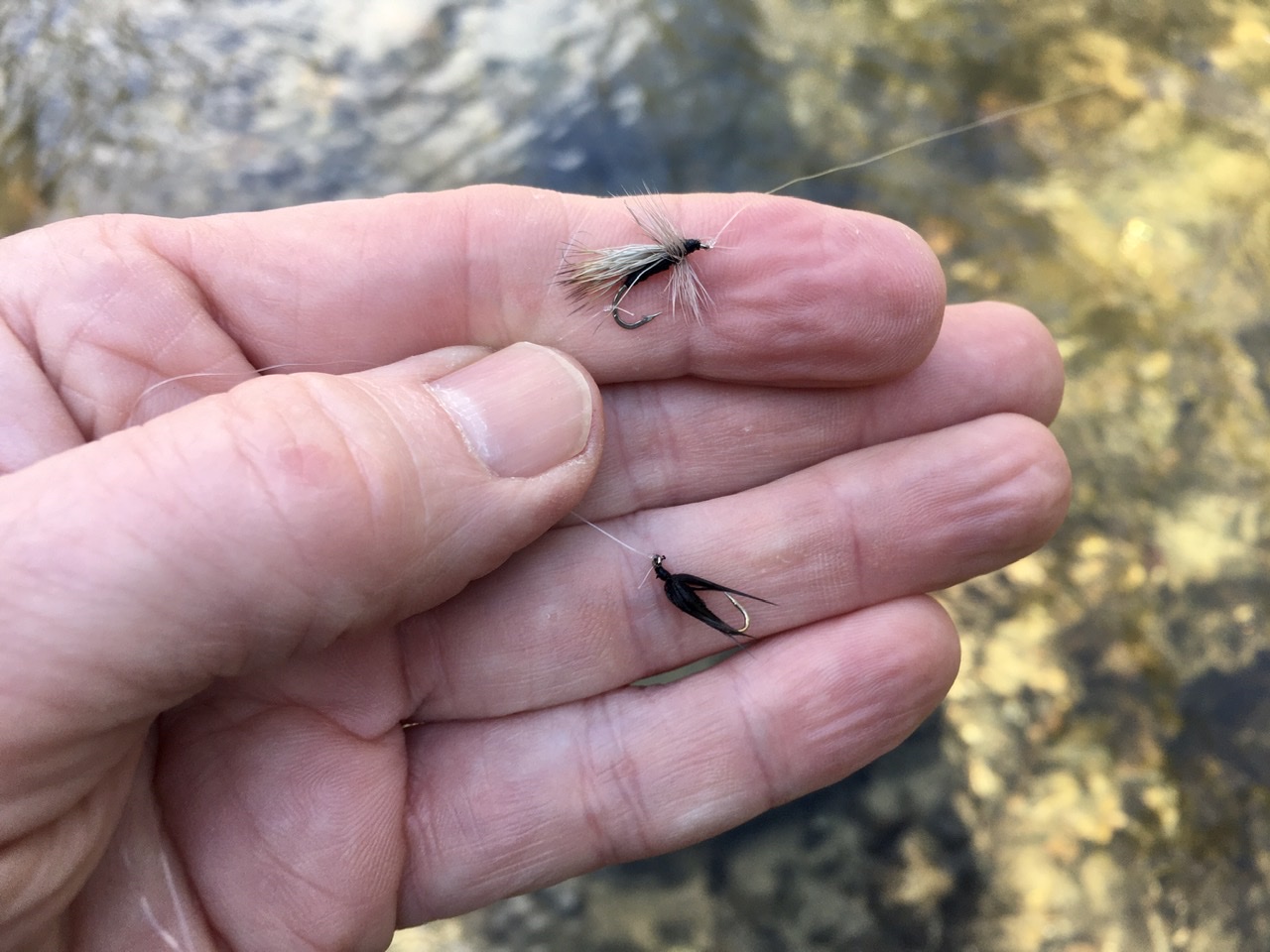
Start looking ahead to spring, especially on warmer tailwaters. My DNR law enforcement buddies taught me that BOLO means “be on the lookout.” Since it’s mid-February, it’s already time to BOLO bugs on warm days like our last two. One of the first spring hatches in north GA is the gray caddis. Although these two videos are several years old, note their dates. I had some good late winter days on top, indeed!
Tie or buy those elk hair caddis in sizes 14, 16, and 18. If you’d like to get real fancy, put a green egg sac on the end of the abdomen via a small green ball of dubbing. More importantly, watch the bugs and imitate their behavior with your fly: surface popping emergers, dead drifting, freshly hatched adults, upstream skittering bugs, and dead drifting, expired adults at dusk, riding low in the film.
Although you’ll still be going deep for most trout this month, dust off your dry fly box and reinsert it into your vest or sling. You’ll be glad you did.
Don’t forget the Gink, dessicant, and some hope for an early dose of dry fly action. BOLO those bugs!!!
Call Unicoi Outfitters (706-878-3083) if you need more advice, flies, or supplies. Good luck!

Sunday, February 21, 2021

Tug of War

How about a front-row seat to the “Nacoochee Bend Tug-of-War?” Enjoy Jason Fallon’s video moment during his successful father/son trip to our Helen waters. It looks like their tag team was a winner!


Thanks to Jason for sharing the great video. He’s a mighty fine net man and father.

Plan soon to make your own lifetime memories on a sunny afternoon astream. Call us at 706-878-3083 to book your trip or to get some hot intel on public waters.


Saturday, February 20, 2021

New Fish Chief

We have a new state fisheries chief.

Dredger: “I worked with Scott for two decades. This is a great pick for WRD Fisheries staff and especially for the Georgia angling constituency, from mountaintop speck chasers to Okeefenokee bowfin fans.”


Congrats Scott! You’re welcome up here any time.

https://georgiawildlife.com/new-fisheries-chief-

UO Fishing Report - 2/19/21

This week will be warmer and drier and will provide some very good fishing opportunities! Small streams are already fishable, while big streams will take some time to recede to safe wading levels after this week’s 3-4 inches of rain. Watch USGS stream gauges and call local fly shops for stream updates. Your other tools for success are a weather app, a stream thermometer, your trusty nymph box, your dusty dry fly box, and scheduling flexibility. If you can plan your trips for the warm afternoons, catching will be better with increasing water temperatures.

Wes’ weekly hot fly list includes: Skwala stone (olive) #10, Micro mayfly nymph (olive) #16, Squirminator (red, pink) #14, Egg (chartreuse) #14, Simi seal leech (black, red) #10, hares ear nymph #14-18, and a couple dries, the gray elk hair caddis #14-16, and parachute Adams #14-18 as the big dry above your dropper or the small BWO imposter. Angler trip reports, hot tips, and more great pics follow. Good luck and be respectful of high water! Headwaters Landon: “I caught a nice bunch of little wild bows from IDBIS creek while turkey scouting with my dog. Water was cold and high, and fish were found next to woody structure. Fish ignored the dry, but ate the #18 france fly dropper.”
RodneyT, “I have fished my favorite wild Brown Trout stream a few times this past month. The latest artic blast had fish hugging the bottom and the bite has been slow, but picky wild browns can be enticed to bite in the late afternoons when it warms into the high 40's and low 50"s. My best success has been derived from drifting a small black (size 12) woolly bugger and then slowly stripping it back. Dropping a size 16 or 18 pheasant tail behind the bugger can increase your catch rate.” We had a reliable trio of Dukes Creek reporters in Sautee, SimmsFlyGuy, and our own Jake. The standard Smithgall theme held true last week. When the water was clear and normal-to-low, small nymphs on thin tippet (6x) worked, but only when the operator was stealthy. Anglers lucky enough to hit high, dirty water scored on big, meaty bugs like stoneflies and leeches on thicker tippet. Delayed Harvest DH streams have fished well when the weather and water have been favorable. They should fish really well with dropping flows and rising temps this week. “Scratch’s” NGTO Smith Creek report: “Saturday 2/13: I figured the rain and cold would keep the sensible fishermen away from Smiths and I was correct - only a dozen cars in the parking lot at noon. I tried all the sensible flies - Y2Ks, black WD40s, rainbow warriors, olive midges, white midges, eggs, purple rubberlegs, olive rubberlegs, etc... - but the only action I got was on a white foam beetle used for a dry dropper that brought one rainbow to the surface. My resulting jerk put that beetle in a tree above my head, never to be seen again. At about 3:00 I switched over to streamers, figuring I might as well give all my flies an equal opportunity at failing. That turned out to be the best mistake I made all day. A white conehead wooly bugger (bought at UO earlier that day) stripped across the current and upstream brought 5 fish to hand over the rest of the afternoon. I tried several other streamers in that time and it seemed like anything 'weird' drew the interest of the trout. I had another catch on a custom olive wooly bugger with yellow lead eyes and some strikes on a large black sculpin-like pattern with a brown fringe. The streamers performed best in fast-moving water, especially near the heads of pools. Another couple I talked to in the parking lot said they had some luck on Zebra midges after about 3:30. I may be incorrect, but I think that was the end of a break in the rain. Maybe some pressure change triggered a bite. I can confirm that they put some of the large broodstock in at Smiths, but she wasn't interested in anything I threw at her. I'm sure she's had everything but the kitchen sink thrown at her over the last week, so good luck to everyone who tries!”
Chattooga DH: we have no recent reports due to last week’s crummy weather. I took a hike up there today (19th). It was milky and too high to fish safely, but should fish well when it recedes to safe wading levels in a day or two. Hopefully the high flows will spread out Walhalla’s superb February stockers. Remember to match fly size to flows, and try bigger and brighter bugs when the water is swift and stained. Scale down your flies as streams drop and clear. Tailwaters Told you so! UO Facebook followers may recall last week’s post, “Bolo Bugs,” and its videos. Folks on the lookout have indeed spotted waves of fluttering gray caddis on slightly warmer tailwaters like the Toccoa. Thanks to UO friend Daniel Bowman for the intel. Make sure you carry some gray bugs with you as the week’s afternoon sunshine “pops” some caddis like popcorn. Always check generation schedules and be very careful with dam discharges before fishing those tailwaters. Private Waters Nacoochee Bend guest Billy N: “Many thanks to Jake for the great tips today. We didn’t have the luck he thought we would on the section in the pasture, but the middle section made up for it. Look forward to fishing with y’all again soon. “
Our own Jimmy: “Young PJ Fitzpatrick and his dad Pres had a good Thursday afternoon at Nacoochee Bend. Water temperature held at 42 degrees and while there were little black stones coming off all afternoon, the action was deep in the clear cold water. Subtle takes required quick reflexes; something the younger anglers have an advantage with. Best flies at the Bend were a red squirmie worm, a Pats Rubberlegs, and Micro Mayfly, all behind a double scoop of split shot.” Lakes HenryC reports, “Striper fishing remains the same... You gotta pick your days for all the right conditions in order to be successful: a pre-frontal forecast with total cloud cover and preferably light winds (but that is not a game changer if windy). Combine that if possible with either the new or full moon phase and you’re putting all the chips for a good outing on your side of the table. On Monday of this week one of my addicted striper buddies hooked 5 under those exact conditions. This will work on ALL North GA impoundments (not just Lanier). It’s a very specific pattern to follow but one that works. The fish will be active at some point in the day when those conditions exist. If you can add a warming trend to this pattern then the fishing is even better! Let the gulls show you where the fish are. Plan your days to follow this pattern over the next 3-4 weeks and get after them!” Bonus Intel Sign yourselves up for GAWRD’s weekly fishing reports for lakes and streams. Most of you will likely tune into the north Ga segment of the statewide report. It’s great intel because they’re allowed to “cheat” with some electricity and nets... and use that trend data to manage the sport fisheries for our benefit. It’s about time for some hot walleye intel and a grocery run for fresh tartar sauce.
https://georgiawildlife.blog/2021/02/19/georgia-fishing-report-february-19-2021/ Good luck this week as you enjoy a brief taste of spring, maybe even with an afternoon riser or two! Call, email, come in, or pull curbside if we can help you in Helen or Clarkesville. Don’t forget your sunscreen!

Thursday, February 18, 2021

Fish Story


We always enjoy a good fish story, especially when it hits close to home. What’s your favorite fish story?

This story certainly hit close to our home, and we thought we’d share Jessi’s “beginner’s luck” tale with y’all. She was fishing at “Headwaters on the Soque” with her guide, “George.” We know George MacMillan as our friend Coach Mac, who has also guided for Unicoi Outfitters since 1998.

If you’re a beginner and hook the fish of a lifetime, it’s always nice to have a veteran coach in your corner. Congrats to Jessi and 23-year veteran Coach Mac on this “fish of a lifetime.”

We hope you enjoy Jessi’s story as much as we did! Feel free to share your own memorable fish tales with us.


Friday, February 12, 2021

UO Fishing Report - 2/12/21

Welcome to Soggy Saturday and Wet Weekdays. Our extended forecast features frequent rains, which are actually good news. Our streams and rivers are low and badly need a recharge.  At least we’ll be spared from the Big Arctic Blast, which shouldn’t make it this far south. Stream temperatures are still pretty good, considering it’s mid-February!


https://waterdata.usgs.gov/ga/nwis/uv?site_no=02330450


This week savvy anglers will watch the weather and water and predict their windows of opportunity. If river flows are high, aim for Plan B, the small headwaters, ponds, and reservoir striper searches. 


If the afternoon will be warm and the stream is clear, carry your dry fly boxes and some hope. And if you’re only tuning into our Friday fishing reports, you’ve missed some great intel in our preceding, daily posts.  Scroll back and look at Rainbow Romance and Dropshotting.  BOLO hatching bugs including 

winter stones, BWO’s, midges, and maybe some early gray caddis if you’re real lucky. (Rumor also has it that there might be a FB page rod giveaway next week, too...)


Wes’ hot fly list this week is varied to reflect last week’s trip diversity.  Nymphs & wets include fire egg, partridge soft hackles of various colors, purple lightning bug, and olive hares ear.  Meaty streamers for river recons (for recently retired broods)  are the sparkle minnow, barred mini-dungeon, and sculpzilla.  Dries that worked on our recent, warm afternoons were #18 or #20 CDC comparadun BWO, same sized parachute Adams, and a #16 black stonefly. Wes said the small dries caught Smith DH fish that were taking small surface bugs on warm afternoons.


We have some great angler reports and hot intel to follow on our extended Facebook post.  The clear winner in this week’s “fish story” competition has gotta be Sautee for his “blueline innovation.”  Enjoy!


Headwaters

Hunter said, “I went with great friend Rodney Tumlin and did some bluelining the morning after the snow came through. I didn’t expect much with the cold weather but was still able to pick up a few brookies. Fish were deep, slow to move, and generally not too hungry unless you gave them something big enough they couldn’t turn down.”


To contrast the weather and fish response, Sautee scribed this fish story: “Tuesday afternoon was sunny with 60+ degree temps that spelled promise for rising fish on my favorite small stream.  After getting done with projects and workmen around the house, I had enough time to slip out for a couple of hours.  I got to the parking area about 3:15 and rigged up with a dry/dropper combo (October caddis dry with #16 beadhead hare’s ear dropper) that has worked well for me on this particular creek.  Once my rig was ready and I got in my waders,  I headed up the trail for about 10 minutes before dropping down to the creek.  


When I got creekside, I quickly realized that I had left my dry fly floatant and dessicant back at the house. I was not happy!  I quickly weighed my options which included: 1) losing the dry and fishing the dropper under a strike indicator, 2) placing the indicator near my dry to keep it topside and hoping it wouldn’t be too close to scare away any fish looking up, 3) fishing the dry/dropper “as is” and continuously drying my fly after every few casts in the hopes it would float, 4) make an attempt at euronymphing, although I knew fish would be watching the surface for bugs.  


But I had decided on the ride over to the creek that I was going to fish dry/dropper.  I just couldn’t convince myself any other rig was gonna work as well.  That’s when I got creative!  What could help keep my caddis on top without causing too much angst in the trout?  The only thing I could find in my pack that floated was my foam fly box and that, of course, was way too big....   


But wait!  Maybe just a piece of it?  Well, to get to the point, while streamside, I cut a piece of my fly box off, used my 6X tippet to tie it to my dry, and proceeded to fish dry/dropper for the next 2.5 hours.  As it turned out, the local wild rainbows had no interest in my hare’s ear dropper.  They did however take my dry occasionally and I brought several to hand that were looking up that evening.  However, the most fish were caught when I switched my dropper to a #16 beadhead Y2K that took advantage of the active, hungry, spawning rainbows. I ended up with 18 to hand ranging from 4 to 10 inches. I’ve included a pic of my “caddis creative float application”

as a reminder to always pack and repack your gear to ensure you don’t have to cut your fly box up while out in the woods.  However, it never hurts to stretch your brain while on the stream.  Thanks for joining me on just another mountain misadventure!”

Dukes

Veteran Smithgall slugger Landon snagged a walk-on slot last weekend and made the most of his 3-hour tour before heading home to family commitments. He landed better than a dozen bows, including several hefty fish. He said the residents were eating leeches, rubberleg stones, and his soft hackle droppers on this quick trip.


Landon is a great example of an angler’s  “home field advantage” at Smithgall. Experienced trouters like him first pay their dues, learn the stream while striking out early in their career, and eventually up their batting averages with more trips to the plate. Reservations: 706-878-3087 for your chance at a home run. Worry more about your technique than your fly pattern and you’ll get more hits.


Delayed Harvest

These Smith Creek reports are “borrowed” from North GA Trout Online, a great resource itself. 


http://www.georgia-outdoors.com/forum


Hillis: “Dredger, thanks for the weekly report, always good intel and tips!! Following up on your intel about GAWRD redosing... Flies that worked for me yesterday afternoon on those freshly stocked trout at Smith were #12 and #14 Confusion Jig Nymphs 

(very similar to Walts Worm), #12 pink squirmy, and #14 pink egg. Caught My biggest fish of the day yesterday on a # 10 Sexy Walts Worm. “


Scratch: “I'll supplement with a Smith's trip from Monday.

There were a surprisingly high number of cars in the parking lot at noon when I arrived, and the majority of fishers were focused on those pools by the bridge (dozens of trout there). Caught my biggest on a pink/orange #10 y2k. I ran through all of my y2k colors and caught 1-2 fish on each. I watched another guy catch about a dozen fish by the bridge drifting a pink san juan.


Up closer to the dam I fished a round of dry-droppers in the afternoon sun and had multiple strikes on #18/#20 zebra midges and WD40s (both black). Watched multiple trout follow the nymph to the surface at the end of the drift and that's where the strikes occurred.”


Note that Smith DH has been very crowded, even on weekdays, so plan accordingly.


Dredger hit the Chattooga DH on a warm Tuesday afternoon. Water temp was 46F at noon and rose to 48F by 5pm.  He struck out via Euronymphing through the first hour. Then he saw a few fluttering stones and switched to dry/dropper.


The stones and risers were few and far between, with few fish convinced to leave their shady, predator-proof hideouts in the low, clear river to rise to his dry. He still caught a small handful of bows and browns. On top. In February.


Conversely, SC buddy Todd whacked them while wading downstream and tossing a double streamer rig.  Dredger crossed his path while fishing up.  They compared notes and here are the tips from two old Hokies. If you want numbers, aim high or low for the fresh winter stockers. If you want some topwater action, look for fall survivors and fluttering bugs in the afternoon.  Aim your dry/dropper rigs for the shallow flats in the middle of the DH section. We need “a good flush” of high river flow to spread out those new stockers.


Private Waters

Palmer reported, “I had a Nacoochee Bend trip on Wednesday.  The fish were extremely active and hungry. Eggs and legs and twitched buggers worked well.  We also caught a lot of trout on the swing with soft hackles.


Lanier

HenryC checked in today, “Striper fishing is actually fair right now. The key is to properly pick your days to fish. You have to be flexible in order to have success. While there are lots of deep fish that fly fishers cannot catch, there’s also a fair number of fish on the surface or within reasonable depths when you fish around prefrontal weather or totally overcast weather. When it’s bluebird skies... stay home! Birds will help you find the fish; look in the creeks for single fish eating between the docks or wherever you see gulls over open water.  The Something Else fly is easily your best fly of choice to match the threadfin shad prey.”


https://www.henrycowenflyfishing.com/


That’s the latest from “Flyfishing Central” in Helen, GA.  Keep your distances, thank a nurse, and remember your raincoats this week!

Wednesday, February 10, 2021

Dropshotting for Deepwater Denizens

Here's Hunter with a quick video breakdown of the dropshot style rig we use for nymphing in high/heavy flows.

https://www.facebook.com/watch/?v=234528114811298

This technique allows you to use more split shot than normal without the stress of breaking off an entire rig if it catches bottom, and creates a slightly different presentation of the flies in the water.

Got any questions? Send us a message or give one of our shops a call and we’ll help you out.

Monday, February 8, 2021

Rainbow Romance

Tis the season for “rainbow romance.”  Research by GAWRD and UGA in the 1980’s revealed that north Georgia rainbow trout spawn from mid-December through March, but the greatest activity occurred from mid-February to mid-March.

Use this intel to your advantage. First, think of travel routes as big bows migrate toward clean spawning gravels. Second, don’t pass up the skinny water in your haste toward the deep pools. Third, consider egg and nymph patterns as you make your drifts through those shaded runs and riffles.


If you see a redd, with or without paired fish over it, go around it. That oval of polished gravel might hold the next generation of trophies for you.  But you probably won’t, as those redds are scattered up and down our clean headwater streams and, after one rain, are hard to spot.  Plus, research in the Southeast has shown that floods and droughts are the main factors affecting wild rainbow trout populations in our headwater streams.  


When you hook a brute, fight it carefully.

Here are a few tips, based on my own experience while recreating  and while snatching invaluable DNR broodfish in a past chapter of life:

  1. Stay below it if possible. Let the fish fight both you and the current. Sprint below it if you have to.
  2. Let the fish win the first round (run) and expel its nervous energy. Don’t clamp down on your drag.
  3. Fight it sidearm (!!!) and eventually steer it where you want it to go.
  4. Patience wins title fights. The fish will tell you when you have the upper hand when it tires and lets you start turning it.
  5. Keep your legs together during a close fight. Don’t let a wide stance look like a woody escape tunnel.
  6. Hide your net til the end. As the trophy allows you to bring it close, finally lift its head toward the surface and surprise it with a tennis-swipe, headfirst, into the net. 
  7. Keep the netted fish in the water while you ready your camera or holler for your friend. “Keepfishwet” is your first priority!  A quick pic or two is secondary.
  8. Release it quickly, then rest on the streambank to celebrate your victory.


For more tips on hunting and landing big fish, peruse “secrets of the Rabunites” and the great columns at Troutbitten.com.  


https://rabuntu.org/about/educational-programs/secrets/


https://troutbitten.com/2019/06/30/fighting-big-fish-keep-em-down/


Give us a call at the shop (706-878-3083) for the latest intel, and remember to SIDEARM during your epic battle.  Good luck during this season of rainbow romance!

Friday, February 5, 2021

UO Fishing Report - 2/5/21


Summary: We saw low, clear, and cold water last week, with the trout action slow for most traditional anglers. However, a few folks who were flexible actually had good days.


The weather forecast is up and down, with some snow even possible tomorrow night at high elevations. Again, watch the weather and road conditions, and pick a warm afternoon for your best social distancing escape to the mountains. We have some intel about recent Delayed Harvest redosings, too.


Wes’ weekly hot fly list includes split case BWO nymph, Micro Mayfky nymph, , trout crack, fire eggs, and the muddy buddy streamer.  Other folks had luck on small soft hackle hares ears, peach eggs, mops, and especially copper johns.   Due to some late news  today, I’ll add squirmy worms and small woolly buggers to the list.  Details are in the angler reports that follow.


Headwaters

Small streams have been slow due to the cold. You’ll do more fishing than catching, and any players will likely take your deep nymph instead of your dry fly.


Delayed Harvest

Today’s  news is that GAWRD redosed  several waters this week, so have your eggs, squirmy  worms, and buggers ready.  Also go early, late, or on a weekday to avoid the weekend crowds. If you haven’t already, go to the GAWRD trout page and sign up for the agency’s weekly fishing reports and trout stocking lists. You might even notice some early walleye intel!


https://georgiawildlife.com/fishing/angler-resources


We had a couple good Chattooga DH reports. RonW said had a great trip last weekend, “The Trio hit "The River"  and had another stellar day.  We  easily caught 50+ fish among the three of us! Kurt tore them up all day and took the numbers honors, with Moe taking the big fish honor. Eggs weighted deep were the ticket all day long. I caught a few on the "Ronco Special" which was used as anchor to get the egg down fast.  Happy to see the Flybrary kicking on the kiosk.That makes my heart happy.


Water was cold, yeah I know I need to get a thermometer. I never let it deter me though. The colder the better! As little as I get to fish, I'll fish in any condition any chance I get.”


Jimmy met two friends in the parking lot yesterday and they distanced along the Chattooga DH. His two buddies fished traditionally, dredging eggs and nymphs in deep, slow pools.   They had slow catching days.   In contrast, Jimmy hit the riffles and had a banner day, despite water that only warmed  to 42 degrees. He said,  “When I first got on the river I was doing what we usually do in mid-winter; I was dredging the bottom in deep holes.  Fortunately, in the second spot I fished, my fly drifted out of the deep pool and into an adjacent shallow riffle where I hooked up with a rainbow.  That dim bulb in my brain brightened slightly and I started focusing only on the shallow riffles, 2 to 3 feet deep.  From then on I was consistently into fish for the next three hours.  I fished a Pat's Rubberlegs with a Copper John dropper with most fish coming on the Copper John.  At the end of the day, I had 16 rainbows, 3 browns, and probably another 6 long distance releases.  No split shot since the water was so shallow where I was fishing.”


Private Waters

UO guide Hunter gave this overview, “Private water fish seem to be predominantly looking for small natural bugs such as midges, soft hackles, and classic nymphs in the 16-20 size range depending on the fly. High water after rains has made fish willing to chase streamers and typical legs and eggs patterns while the water is up.  As soon as it drops, they key in on the small stuff again. Look for the sun to break through in the afternoon and be ready to fish midges or midge emergers like rs2’s and wd-40’s if some midges start popping off.”


UO guide Palmer checked in today: “I had a trip yesterday at the bend it’s was cold and slow. But if you could get a orange pearl soft hackle on their nose they would take it every time.”


That’s the latest news as we welcome February and its challenging fishing conditions. Dress warmly, watch the weather, water,  and road conditions, and be distant and safe. Give the fly shop a call if we can help you further. Good luck!

Wednesday, February 3, 2021

Classic Winter Standbys

Classic Winter Standbys

by Jake Darling

Unicoi Outfitters

Winter trout angling can be very productive for anglers willing to brave the elements. During this time of year, many anglers have put away their tackle, waiting on warmer days of spring to venture back on the water. The truth is, winter in Georgia is one of the best times of the year to be on the water for trout fishermen, as angling pressure is at its lowest, and fish are still feeding during the warmer hours of the day. One thing many anglers struggle with is fly selection:  sure, most biomass found in rivers during colder months is often smaller and darker, but there is more to the story than just that. Understanding available food for trout during the winter will help you have more successful days on the water. 

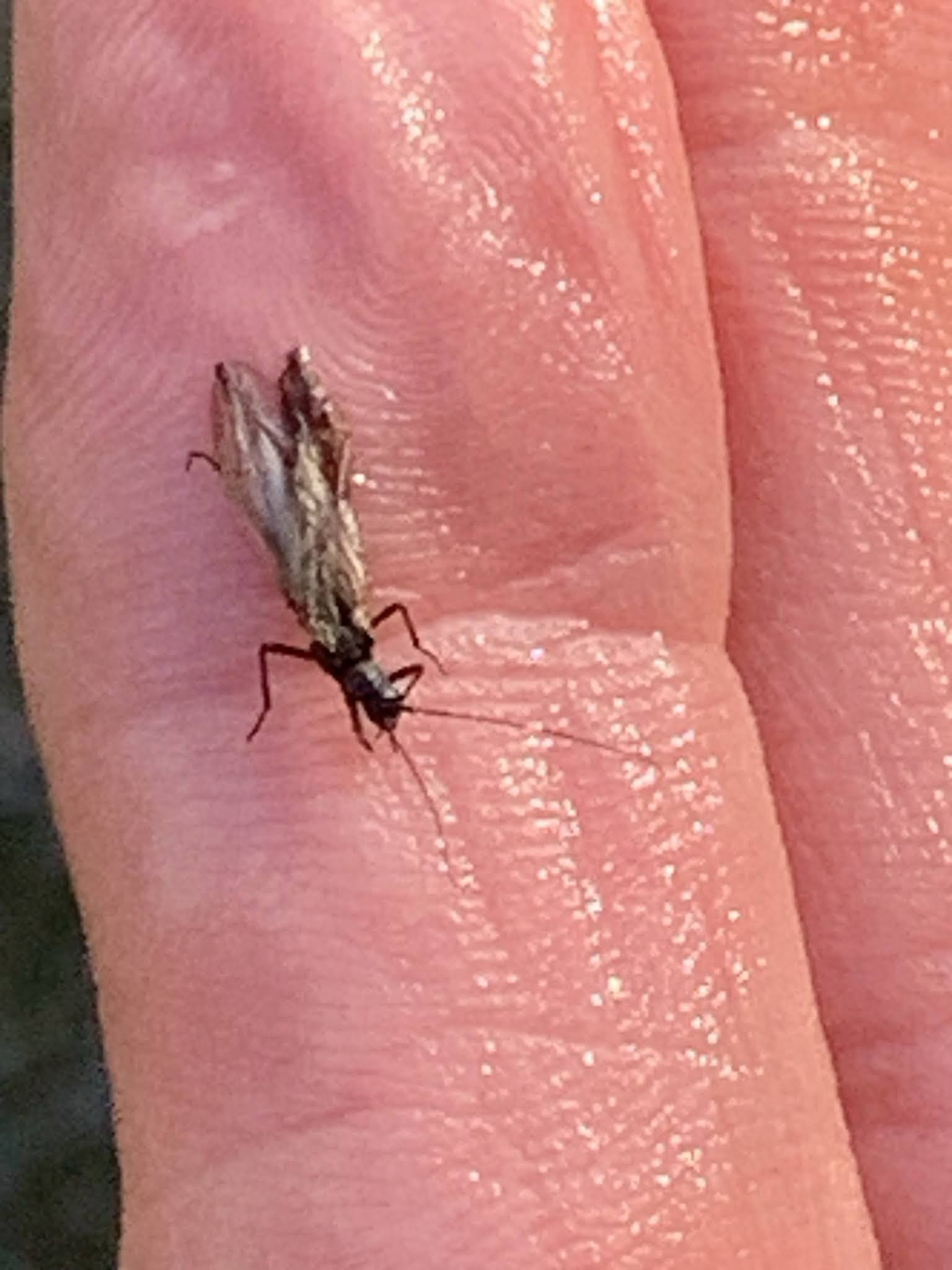
The Little Black Stonefly hatch is probably one of the best-kept secrets in north Georgia during the winter. Often these insects are very small, dark, and are hard to be seen flying in the air. One of the best ways to notice when these bugs are hatching is seeing them crawling on your waders or clothing. When they are active, fish gorge themselves on these bugs. There are many different patterns to mimic the Little Black Stones, but I like to keep it simple. Some of my favorite patterns would include Black Lightning Bugs, Black Copper Johns, Black Pheasant Tails, and Black Hares Ears (all in sizes 14-18).

If you turn over a rock this time of year, chances are you will see small dark-colored mayfly nymphs crawling on the underside of the rock. Typically, these are small Blue Winged Olive nymphs. These insects can be found in almost all trout streams across north Georgia during February, and just because you don’t see adults flying around doesn’t mean the fish aren’t eating the nymphs below the surface. Try patterns such as Olive Pheasant Tails, Split Case (BWO), and Mighty May Sloan Baetis nymphs, all in sizes 16-20. 

Another strong player during the colder months is an assortment of small midges. Many days, swarms can be seen dancing around near the water’s surface and can often be tough to mimic with flies. Usually, I keep it simple with my midge selection, and often I will pass on the single fish rising to midges as these fish can be very hard to fool. Having said that, there are many fish on or near the bottom of the stream that will often not pass up a small midge larvae. Of course, a heavy hitter would be the Black Zebra Midge, but some of our favorites around the area include a Root Beer Midge, Diamond Midge, and Evenson’s 2be Midge Larva in Black. These insects are much smaller, so you will want to drop down to sizes 18-22. 

February offers up some great fishing for anglers willing to get on the water. Dress for success and be sure to carry plenty of split shot to get your offerings down to where the fish are hiding. Typically, focus most of your angling time around the warmer portions of the day, this is when the fish are most active. Be sure to pack some of these patterns in your box and you will have everything you need for some successful time on the water!

Monday, February 1, 2021

The Rabunite Thermometer


As a professional fisheries biologist for more than three decades and an avid trouter for five, I’m convinced that water temperature is the most important environmental factor controlling the behavior of our cold-blooded quarry, mountain trout.  My hillbilly clan, the Rabunites (www.rabuntu.org) thinks so, too.  They developed their own, highly effective fishing thermometer.  Let me decipher it for you!


1)    Under 40 degrees and falling.  Rabunite definition: “watch the icebergs.” Interpretation: 40 degrees is your first key number.  Below it and our cold-blooded critters are frozen and getting even colder, so anglers should expect few strikes. But the air is clean, streams are uncrowded, and you’re just happy to get out of the house.  Fish 11AM to 3PM.

2)      <40, but rising: “bring hope.” Trout are acclimated to very cold water, but rising water temperature feels like a warming trend and can key a bit of feeding activity.

3)      40-45: “bring a net.”  Trout begin to stir, and they stir a bit more with each degree of warmth.  It’s a good time to dredge the bottom of deep, slow pools with egg, stonefly, and mayfly nymph patterns.

4)      45-50: “bring a net and a camera.” Action increases and really takes off when temperatures near the next key, the MAGICAL 50-degree mark!  Most action is still subsurface, but it can be consistent, especially when there is a warm spell that increases water temps several degrees.  Try drifted nymphs, but also give streamer-stripping a shot.

5)      50-55: “bring some dries, too.”  Early spring bugs start hatching and trout are all over the water column, wherever the groceries are.  They’re sipping nymphs in the drift and looking out for midday hatches of gray caddis and Quill Gordon and Blue Quill mayflies.  It’s a good time to consult online “hatch charts” to know which dry flies to carry.

6)      55-62: “bring a friend with a camera.”  In angler terms, It’s On!!!  Trout are ravenous and chowing down in bug buffet lines.  Again, watch those hatch charts and bring the right bugs.  You might catch a bunch, some big ones, or a bunch of big ones.  Bring a witness with good photography skills so you’ll both have lasting memories of your great trip!

7)      62-68: “bring supper and a flashlight.” Waters warm and clear as spring transitions to summer.  Daytime fishing is dead, but the last hour of daylight can be great.  We call it Dark30 and we won’t miss it, as both bugs and trout come up to play right before slap-dark!

8)      >68: “bring breakfast and an iceberg.”  Trout fishing is really over for the season.  Temps over 70 are often lethal to trout, especially if angling stress is added.  Streams are coldest in early mornings and you might have a brief shot at dawn, before the hot sun rises.


Put a $15 stream thermometer in your vest and save a copy of this article to your Iphone notes page.  Let the Rabunite thermometer guide you to trouting success in the new year.  Good luck!


Story credit: Coastal Angler Magazine- Atlanta edition

https://coastalanglermag.com/e-magazine/atlanta/