I've known Steve Hacker for a number of years and get to fish with him now and then on his home waters in north Alabama. Steve is probably the foremost smallmouth guide in the region and knows those lakes as well as anyone who's ever fished them. I get regular fishing reports from him but this most recent was so good I thought our readers would enjoy reading it.
Jimmy
PICKWICK FISHING REPORT
2.25.13
Water temp: 48.2 degrees
TVA discharge rate: spillways reopened; approx. 104,000 cfs/24 hr. period.
Lake elevation: risimg; approx. 419
Pinching myself to make sure that I'm not just having a dream about a day full of giant fish! Mat Lipscomb came over from the Memphis area and met up with former Memphis State college roommate and good friend Rick Benson. Having known both of them for years, I was really looking forward to the day. Little did we know when we launched what kind of day it would turn out to be!
Mat was the keeper of records, as he brought two sets of Chatillon scales with him, and a piece of paper and pen to keep track of what we caught. The first place we fished yielded nothing, but a move proved to be just what we needed.
Our five best today weighed in at almost 32 pounds! Our 10 best liked 2 ounces weighing 53 pounds! Each of us contributed big fish and had something to crow about!
Rick had the big fish at 9-1, a magnificent largemouth, his personal best. Mat had the big smallmouth, I think equaling his personal best, Rick had the big spot, and Mat said that I had the best 5 fish individual string of the three of us at 25-10.
We had a Grand Slam of smallmouth, largemouth, and spot—3 fish Slam—that weighed 17-11! Rick had a Grand Slam by himself that weighed 16-8! Where else can you do that? What a lake!
A couple of fish were caught early on on jerkbaits, but the great majority of the fish were caught on Strike King Pro Model Football Jigs in ½ and ¾ oz weights trailed with Rage Craw trailers. Even after washing and eating supper, my fingers still smell like Kick'n'Bass Craw, and that's just fine with me.
Greatly blessed we were today, as the weather and water conditions were pretty rough, and getting rougher as I write (I can hear the thunder approaching in the distance, and some storms with even bigger winds than the 20-25 mph we had today are forecast for tonight).
Enjoy the pix, and all the fish were released in great shape just as soon as we took these. A replica mount of the big 9-1 is planned.
God bless,
Steve Hacker
www.smallmouth.com
Unicoi Outfitters is north Georgia's premier guide service and fly fishing outfitter, located on the Chattahoochee River near alpine Helen. Look for fishing reports, gear and book reviews, and general musings here from our staff and guides.
Wednesday, February 27, 2013
Wednesday, February 20, 2013
Brown Trout Tactics
Posted by
Jimmy
at
2:34 PM
From our Man In The Field, Landon Williams:
There
is just something about Brown Trout that get many anglers’ hearts racing and a
large grin on their face. We all dream of catching a large hook-jawed brown that seems as old as the dinosaurs. They are for many, the most prized and even most frustrating
species of salmonid we can pursue here in the Peach State. Despite our fascination with them, it’s a surprise to many anglers when they do catch one. This is due in large part to the varied habitat that brown trout prefer and the tactics used to target them.
There are three types of habitat that can be noticeably
improve your chances of running into a nice brown trout, whether it be a
Delayed Harvest fish or an elusive stream-born wild fish. The first and, in my opinion,
most important structure a brown trout will utilize are undercuts. Undercuts
exist here in GA quite often but not in the same sense you may think of in a
meandering meadow stream with undercut banks out West. Rather, I'm referring to large undercut
rocks and my favorite, bedrock shelves. It is quite common to find brown trout
hiding under such types of habitat, even if it is not particularly deep.
Last but not least are those bank side pockets and runs that
many anglers often ignore. Current
along the bank is usually quite slow compared to the middle sections of river. Brown trout, who are fans of slower
current, can be found in runs and riffles right next to the bank, especially if
they have overhead cover in the forms of bushes or overhanging trees. This
habitat type is even better if they incorporate any of the two previously
mentioned attributes.
Landon
Browns
have a tendency of not being in the places many anglers expect when
targeting trout. Most anglers will fish in the classic riffles and runs that we think of as great trout
habitat. You can certainly find brownies in these spots when they are actively
feeding, especially when there are heavy hatches during warmer weather. However, you are much more likely to find browns in the water you may find much less desirable to fish on a regular basis. You know the type, usually deep and slow interspersed with
structure such as woody debris and large boulders. This is indeed the type of
water where you’re most likely to encounter a brown. At the same time, this water may be the one where
anglers are least likely to be successful. Slower water gives an angler's quarry much longer to inspect the fly before deciding to eat or not. This game for some can be quite exciting
and challenging but for many anglers, who are just out to catch a few
fish, it may seem it's not worth the effort. Fear not however, as there are a few key areas where brown
trout get the same type of protective habitat while still having more water
flow over their heads and it can tip the scales in the angler’s favor.
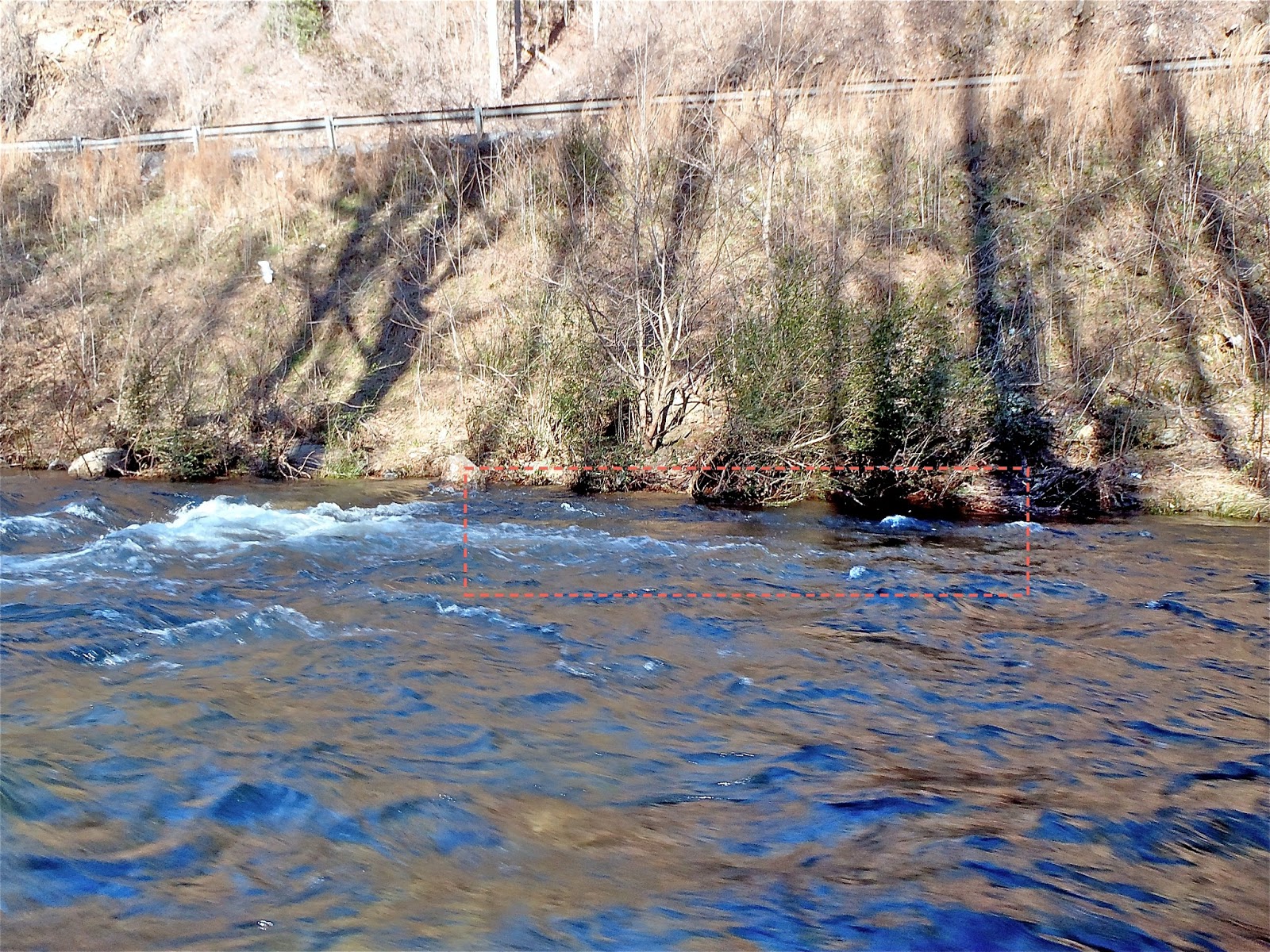
A second type exists less frequently but still provides
great habitat. It's a back eddy. Back
eddies are usually slow and provide a large volume of food as it drifts away
from the main current. It is not uncommon to find browns here and they can be
targeted by casting into the “upstream” side of the back eddy (this may even
mean casting downstream into the eddy’s current and fishing the drift back
upstream.)
Fly selection in itself is secondary to having the proper
presentation and a sneaky approach to your target area and quarry. Good Luck and have fun in your quest for
a trophy. I know I will when I go
after the large wild brownie who broke me off recently in a
log jam!
Landon
Tuesday, February 19, 2013
Happy Birthday To You
Posted by
Jake Darling
at
3:29 PM
Growing up, my parents always made sure I understood that a man must always keep his word, and that he should never make a promise that he did not intend to keep. My parents' words bounced around in my head as I laid in the warm bed Sunday morning, wondering how mad my friend would be if I backed out on him on his birthday float trip. Then as I lay there in bed, another phrase popped into my head that my Father would always say: "You never know, unless you go". This was his way of telling all the people who asked him if he honestly thought that he was going to catch fish in extreme weather conditions.
Knowing that the high for the day was only supposed to be around 38 degrees, I slowly climbed out of bed and began to get ready, knowing that I had made a promise that I intended to keep. As we drove to the river, I began to ask myself if I was mentally prepared to freeze my butt off and not catch any fish.
We arrived at the river and prepared to set sail on what could be the most miserable day that I had faced this year. We launched the boats and managed to get enough of the frozen anchor rope out to hold the boats in place until we returned from our shuttle. After putting on every piece of clothing that I had brought with me, we departed down the river. In the first mile of the trip, I quickly changed my opinion about how the day was going to be, as we began to pull fish after fish into the boat. Not only were we catching fish, but we were catching quality fish, with the average being around 17 inches. As luck would have it, Ryan Williams managed to put the first fish in the boat on this particular trip, which was only fair, since it was his Birthday.
![]() |
| Ryan With A Quality Rainbow |
The boys in the boat behind us were not going to be outdone by a bunch of young guns, and immediately responded with a stud of a brown trout. We all stopped fishing and turned around to watch Mike wrestle with what he called: "The biggest brown he had been hooked into since his trip to Montana last year". The fish ran in and out of trees and tried his best to lose Mike, but Mike's expertise eventually brought the brute into the boat.
![]() |
| Mike's Big Brown |
As we continued to float down the river, we experienced what I will remember as one of my best days on the Toccoa River. Some days you put up numbers some days you put up size, but on this day we did both! I'm sure that Ryan couldn't have thought of a better way to spend his birthday, now I just have to talk him into rowing me down the river on my birthday. Happy Birthday Bud!
Monday, January 28, 2013
Fishing Rising and Falling Water Conditions
Posted by
Jimmy
at
10:39 AM
With all the rain we've experienced over the past couple of weeks, we thought we would ask Landon Williams to be our guest blogger and help you understand how we continue to catch fish even under adverse water conditions.
How to Deal With the “Rise” and “Fall” of Winter Weather
Landon Williams
The monsoon of last week may be
over but our rivers and streams are just now starting to get back to
recognizable flows. Fishing when the water is lower is always less demanding
physically but when it’s high from events such as the recent rain, conditions
can not only be unfavorable for the fishing but also dangerous with the raging
water and decreased visibility. However, there are the periods of rising and
falling water that provide very challenging and sometimes even rewarding
fishing conditions in themselves.
| Raging Dukes Creek - The Swimming Hole |
| Dukes Creek Bow in High Water |
| Finding the High Water Refuge |
More importantly, keep yourself safe when wading this time
of year. Wear a wading belt, use a staff, and fish with a buddy if possible.
Also keep an extra pair of warm clothes at hand in case of a dunking. Perhaps
most importantly, have a camera… Just in case!
Tuesday, January 15, 2013
Meetings on Corps of Engineers Plans to Close Six Tennessee Tailwaters
Posted by
Lee
at
12:32 PM
|
Monday, January 14, 2013
Did You Make It To The Chattooga This Weekend?
Posted by
Jimmy
at
8:08 PM
![]() |
| Hey, anyone can hook a fish in the mouth! |
![]() |
| A Black Elk Hair Caddis will match the Stoneflies |
It's raining almost every day this week and things are expected to turn colder but this is prime time on the Chattooga DH. If you can get away, and the water level is 2 feet or less, you need to plan a trip there. And you may want to pack some Pat's Rubber Legs.
Tuesday, January 8, 2013
From the Tennessee Wildlife Federation
Posted by
Lee
at
3:35 PM
|
Sunday, December 30, 2012
Hat Trick on the Chattooga
Posted by
Lee
at
7:31 PM
This just in from Nanook of the North...
Our Georgia folks oughta take advantage of the DH program, especially if the Hooch Tailwater is still fishing tough for a few more days until the Lanier turnover is finished. The Chattooga provided the hat trick yesterday, with a bunch of rainbows, three brooks, and a brown being "fondled".
TV weather reports seem to scare off many Georgia trouters, but they often do not accurately describe the true fishing conditions of our winter waters. Instead, a) weather radar and hourly forecasts on web weather sites like Intellicast, b) the USGS "Real Time" website's stream gauge data (water temp and flows), and c) good friends at local tackle shops or fishing clubs like TU and NGTO, are much better "strike indicators" to help folks decide whether to burn their time and gas on a trek north. We seasoned dudes call this "net fishing," as we fish the inter-net the night before we decide which stream, if any to visit.
Another important tip: it's winter fishing season and Georgia trouters should consider adapting their techniques to the season and the higher water flows. I would encourage anglers to lengthen their leaders (better yet, use straight mono or fluoro) to the maximum length they can handle, and add enough shot to get their offerings down. The flies need to cut through the water column and scrape along the bottom. Thick leader butts and midsections are counterproductive at this time of year, as the heavy flows catch that thick stuff and and drag an angler's flies quickly away from the bottom-hugging fish. If anglers still want to use tapered leaders, they should at least add 3-6 feet of 3X to the ends of those 7 or 9-foot leaders, then add their tippet and flies. Tapered leaders aren't needed to cast flies, as the slingshot effects of lead do a fine job!
I've seen this quote in enough fly fishing books and it rings especially true now, as we welcome the new year:
"The difference between a good day fishing and a great day fishing is one more split shot."
My rig yesterday was about 12 feet of 8 pound mono, a large, sliding cork strike indicator (Lightning Strike brand, with hole thru the middle) that was usually within a couple feet of the fly line, 18 inches of 4X to the #10 leech, and 18 inches of 5X from the leech's hook bend to the #18 pheasant tail. I used one to three removable, size BB split shot above the knot at the 8lb/4X junction. Shot numbers and indicator location (2X water depth) on the leader were changed to accommodate each pool. A rubber band or toothpick made the indicator adjustment quick and easy. An occasional bounce of the indicator told me when I found the "tick-tick" of a good drift along the bottom. And an upstream-lunging indicator told me that a fish agreed!
For new folks, the shallower heads of pools are easier to fish. They don't require as much leader length, which makes casting easier. I like traditional casting, but I like catching even more. I'll return to casting around March, when the water warms, the bugs get frisky, and the fish start looking up again. Right now, I use short casts with roll casts, water loads, and an occasional Belgian backcast (thanks to Hoover Burrell) to put the rig in the water with zero or few false casts and very, very few tangles.
There is no one "right way" to fish, but maybe this method will add to the arsenals of our newest trouters and help them "grip-n-grin" some more this season. Then they can "pass it on" to the newbies that they meet. More tips here.
The fish are there. They are hunkered down, but still hungry. Georgia trouters oughta put a disposable handwarmer pad on top of their toes, in between two pair of wool socks, slip into their waders, and go get 'em!
Happy New Year,
Nanook
Ed. Note: After this post was published, we had folks asking for a detailed description of how to rig the indicator so we got the full story from "Nanook". Hope this helps.
Our Georgia folks oughta take advantage of the DH program, especially if the Hooch Tailwater is still fishing tough for a few more days until the Lanier turnover is finished. The Chattooga provided the hat trick yesterday, with a bunch of rainbows, three brooks, and a brown being "fondled".
TV weather reports seem to scare off many Georgia trouters, but they often do not accurately describe the true fishing conditions of our winter waters. Instead, a) weather radar and hourly forecasts on web weather sites like Intellicast, b) the USGS "Real Time" website's stream gauge data (water temp and flows), and c) good friends at local tackle shops or fishing clubs like TU and NGTO, are much better "strike indicators" to help folks decide whether to burn their time and gas on a trek north. We seasoned dudes call this "net fishing," as we fish the inter-net the night before we decide which stream, if any to visit.
Another important tip: it's winter fishing season and Georgia trouters should consider adapting their techniques to the season and the higher water flows. I would encourage anglers to lengthen their leaders (better yet, use straight mono or fluoro) to the maximum length they can handle, and add enough shot to get their offerings down. The flies need to cut through the water column and scrape along the bottom. Thick leader butts and midsections are counterproductive at this time of year, as the heavy flows catch that thick stuff and and drag an angler's flies quickly away from the bottom-hugging fish. If anglers still want to use tapered leaders, they should at least add 3-6 feet of 3X to the ends of those 7 or 9-foot leaders, then add their tippet and flies. Tapered leaders aren't needed to cast flies, as the slingshot effects of lead do a fine job!
I've seen this quote in enough fly fishing books and it rings especially true now, as we welcome the new year:
"The difference between a good day fishing and a great day fishing is one more split shot."
My rig yesterday was about 12 feet of 8 pound mono, a large, sliding cork strike indicator (Lightning Strike brand, with hole thru the middle) that was usually within a couple feet of the fly line, 18 inches of 4X to the #10 leech, and 18 inches of 5X from the leech's hook bend to the #18 pheasant tail. I used one to three removable, size BB split shot above the knot at the 8lb/4X junction. Shot numbers and indicator location (2X water depth) on the leader were changed to accommodate each pool. A rubber band or toothpick made the indicator adjustment quick and easy. An occasional bounce of the indicator told me when I found the "tick-tick" of a good drift along the bottom. And an upstream-lunging indicator told me that a fish agreed!
For new folks, the shallower heads of pools are easier to fish. They don't require as much leader length, which makes casting easier. I like traditional casting, but I like catching even more. I'll return to casting around March, when the water warms, the bugs get frisky, and the fish start looking up again. Right now, I use short casts with roll casts, water loads, and an occasional Belgian backcast (thanks to Hoover Burrell) to put the rig in the water with zero or few false casts and very, very few tangles.
There is no one "right way" to fish, but maybe this method will add to the arsenals of our newest trouters and help them "grip-n-grin" some more this season. Then they can "pass it on" to the newbies that they meet. More tips here.
The fish are there. They are hunkered down, but still hungry. Georgia trouters oughta put a disposable handwarmer pad on top of their toes, in between two pair of wool socks, slip into their waders, and go get 'em!
Happy New Year,
Nanook
Ed. Note: After this post was published, we had folks asking for a detailed description of how to rig the indicator so we got the full story from "Nanook". Hope this helps.
"Last year a visiting Michigan steelheader, whom the Guru and I met in the Chattooga parking lot during the holidays, showed us his indicator rigging technique. Up north, he said that he fished a lot of heavy water with serious bobbers and serious lead, and had to change his indi depths often to get good drifts on plane with chrome noses. Since he was kind enough to share his indicator technique with us, I'll "pass it on" to ya'll.
"Here we go:
"He first threaded a cork or balsa indicator, with a hole thru its length, onto his leader and slid it up to the start of the leader's thick butt section. Now the indi is on the leader. It will stay there.
"He then cut a 12-inch piece of strong mono (maybe 2x or 3x) and also threaded that thru the indicator. (If you're counting, this makes two pieces of mono threaded thru the indi.) Once his tag end emerged on the far end of the indi, he pulled several more inches of mono thru the indi, turned the tip around, and threaded it back thru the indi, leaving a small loop of that mono hanging out of the far end of the indi, and the two tag ends of the 3X mono hanging out of the original, near end of the float.
"Thru that loop of mono, he threaded a long piece of rubber band to its midlength. Then he grabbed the two distant, tag ends of mono and pulled them tight to "lasso" the middle of the rubber band with the mono loop on the other end of the indi. He then pulled the two tag ends of mono to pull the loop of rubber band all the way thru the indicator. Once the rubber loop came thru a bit (3/8 inch or so), he discarded his mono threader (put it in a trash container in the car). He them trimmed off the two tag ends of the rubber band, hanging out of the distant end of the indi, to about 3/8 inch. He now had a doubled-up piece of rubber band as his stopper thru the core of the indicator, which was already threaded onto the leader (step 1). He gave the 3/8 inch protruding ends (tags and loop) of rubber band a twist or two to tighten and secure the indi to his leader at the depth he wanted it.
"He could easily untwist, slide the indi up or down his leader, and then retwist his rubber band stopper. This rig made adjustment of the indicator along the length of his leader very quick and easy, with no kinks like those thimgamabobbers are notorious for, and no knots. The indicator could not get tossed off the leader and lost, like slotted indicators do. It's a great winter rig when an angler knows he's gonna indicator-fish all day!
"I learn something new from each angler that I say hello to in the parking lot or along a stream. Fishing can be a communal sport. It is one that leads many folks toward more fish and eventually into the conservation of their favorite trout waters. Learn from seasoned anglers, teach the newbies, and participate in the conservation community that we are all a part of. Pass it on."
Nanook
(Dredger)
Monday, December 17, 2012
Now This Is Funny!
Posted by
Jimmy
at
3:32 PM
Considering that we don't have to quit fishing in the Winter like the folks in New England and the Rocky Mountains!!! Yahooo! From our friends at Orvis....
Pro Tip: Cleaning and storing your gear for the off-season
![]() |
For many of us, the fishing season never ends, but for those who do put away some of their equipment—dry-fly rods, the 2-weight you use for native brookies, etc.—for the long winter, storage is important. Although most fishing gear will last for years if you treat it right, incorrect storage can shorten that life span or ruin the aesthetics of a fine rod or reel. For instance, C. Boyd Pfeiffer, the godfather of tackle craft, tells of how he put a fly rod away wet, and when he retrieved it in the spring it was covered by tiny white blisters under the finish. Here are some tips to help you avoid such an unwelcome surprise.1. The end of the season is the perfect time to clean all your gear. Before you store rods, reels, waders, and lines, you should wash them and allow them to completely dry.
Rods: An old toothbrush is perfect for lightly scrubbing around the hardware and guides. Pfeiffer notes that taking several rods into the shower with you is a convenient way to get the job done quickly. Make sure you rinse the rods thoroughly and allow them to air dry.
Reels: You can use the same toothbrush for getting all sand, salt, and grime off your reels. Take the lines off all reel before you wash them (although you can leave the backing on). Again make sure you rinse all parts thoroughly and put them on a towel to dry. When one side is completely dry, flip the parts over, so any water hiding in nooks and crannies can run out. Do this a few times.
Waders: Rinse them completely, wiping off any dirt or salt, and hang them to dry. Then turn them inside out an allow them to hang for awhile longer to air them out.
Fly lines: Always follow the manufacturer’s instructions for cleaning your lines. Using dish soap will actually remove the slick coating. A moist rag will usually do the trick.
2. Now it’s time to inspect and perform routine maintenance.
Rods: Check all the guides and ferrules to ensure they are in good shape. Apply ferrule wax to the male ends of the ferrules. Check the reel seat to make sure the threads are clear of debris.
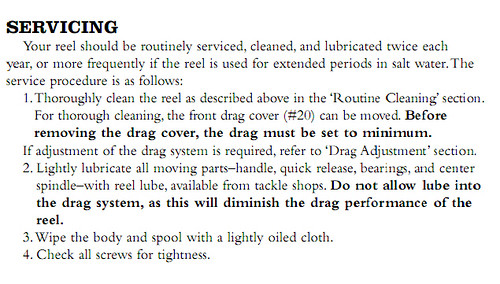
Reels: If your reel requires lubricant (although few modern models do), follow the manufacturer’s instructions for doing so. Make sure all screws are tight. Do a final inspection to see if you missed any sand or salt residue.
Waders: Check them for wear and tear or leaks. If there are abrasions or nicks that look like they may become leaks, you might want to do a prophylactic repair with a patch kit.
Fly lines: Check the line for nicks, and test the loops at both ends to ensure that they are still strong.
3. Storing your gear correctly will ensure that it’s good as new when you need it.
Rods: Again, make sure the rod is completely dry before you put it in its sock or tube. Arrange your rod tubes horizontally, rather than standing upright. Finally, Pfeiffer suggests that you leave the end caps off entirely to allow the rods to “breathe” during the long months of storage.
Reels: The big enemy of reels is corrosion, so make sure they are fully dry. You can choose to store them in their bags, but leave a gap in the opening to allow any moisture to escape. Before you put a reel away for the winter, back the drag off completely. This will reduce wear and tear on the discs or other components.
Waders: The best way to store breathable waders is to hang them, but not by the suspenders or the boot feet. Instead, drape them over a hanger, allowing air to circulate all around them. This way, you don’t stress the suspenders or where the wader and boot material come together.
Fly lines: Fly lines should be clearly labeled and hung in loose coils over a hook or a nail. This will keep them from developing too much memory over the winter.
Guide Joe Demalderis says that, if your don't want to take the lines off the reels, leave your line attached to the spool and lightly coil the line around a large coffee can. Then toss the reel or spool into the can and snap the plastic lid on over the backing. The tension from the lid doesn't hurt the backing. Now your lines are stored in a less-memory-setting situation and your reels or spools are protected from dust and grime.
It goes without saying that all your gear should be stored somewhere that’s dry and is relatively climate-controlled—that is, a place that doesn’t experience wide swings in temperature.
Friday, December 14, 2012
Chattooga DH Report 12/13
Posted by
Jimmy
at
8:16 AM
Our friend Doug Brown submitted this Chattooga DH report:
December 13 was a clear, mild day.
Reid Brown, Ron Nagao and I drove to the Highway 28 bridge that crosses
the Chattooga River at the Georgia/South Carolina state line. We stopped by the Chattooga River fly
Shop and talked with Karl. He said
by now (six weeks into the Delayed Harvest) that the trout were distributed
though out the three mile dh section above 28 bridge. He suggested #16 black stone emerger.
![]() |
| Jeff Durniak swinging soft hackles on Chattooga DH |
The three of us hiked up stream on the Georgia side to the
crossing. I saw two takes on the
surface and tied on a rusty spinner and then a BWO and I saw one trout rise and
refuse the BWO. We spread out and
I went to a favorite piece of water and continued to cast dries and nothing
rose. I tied on a barbless #16 bh
black soft hackle and began to land rainbows from this run. I walked up stream above the rock
chairs and tried a short cut and became tangled in briers and honeysuckle so I
backed out and found a trail to the river. I fished a long run that hugs the South Carolina bank. I cast near and then to the far side
and hooked rainbows on the down swing.
I’d let the line straighten downstream, hesitated and lifted the tip up
which brings the nymph toward the surface, like an emerger, and the trout
nailed the soft hackle fly.
The air temperature began to warm up considerably by 2:00pm and I walked
down stream and found a fine piece of dry fly water. There was a good trout rising near a rock. He swirled under the fly. I rested the water and he began to feed
again and I cast and nothing.
Other fish began to rise and sip, there were many midges and what
appeared to be #18 mahogany mayflies in the air and around the water where the
sun lit the surface. I had no luck
fishing dries. I met up with Ron
and Reid. They had each landed trout. Reid landed his on size #24 black
midge. Ron landed his on soft
hackle nymphs of various body colors.
Reid and I walked back to the crossing. I continued my downstream drift with the black soft hackle and
hooked and landed a 20” brown.
This was a fine, thick and powerful fish who refused to come to the
net. I did not want to exhaust
this trout in order to land him so I asked Reid to net the brown for me.
Were the fish scattered throughout the river? I don’t know.
But today was the first day of this season that I saw anglers throughout
the river’s course.
Tuesday, December 11, 2012
Nacoochee Bend Winter Special
Posted by
Lee
at
3:34 PM
The best deal on private stream trophy trout fishing in north Georgia is available right now with our Christmas special pricing at Nacoochee Bend. The access fee to fish at Nacoochee Bend is normally $120, a good deal in itself. But starting today (12/11/12) we're cutting the cost of a half day trip to only $90.
You won't find anything to beat it, so come by the shop, give us a call (706-878-3083) or go to our online store and select the "Nacoochee Bend Winter Special Gift Certificate".
This is a limited time offer at this special price but we do require these gift certificates to be redeemed no later than March 31, 2013. So, if you're looking for that special Christmas gift or you're getting cash from Santa, here's your opportunity to get more bang for your buck.
Friday, December 7, 2012
U.S. Army Corps of Engineers Proposes Fishing Ban on Cumberland River Tailwaters
Posted by
Lee
at
1:50 PM
Normally, we'd just post a snippet of someone else's blog post with a link so that you could read it yourself on their site...but I think this bears printing here in its entirety. We first read this on www.outdoorlife.com.
As if a ban on fishing on the Cumberland River isn't bad enough (and that's pretty dang bad!), the bigger concern is the precedent this could set for all rivers on which the Corps has a dam!
December 04, 2012
U.S. Army Corps of Engineers Proposes Fishing Ban on Cumberland River Tailwaters - 2
by Tony Hansen
Ah, you've got to love the U.S. Army Corps of Engineers.
From the group that brought you the Chicago sanitary canal and a steady flow of invasive species into America, comes the next great hit to anglers everywhere: Bans on fishing in tailwaters below some of the most popular dams in the nation, citing "safety concerns."
A recent report on Nooga.com outlined the issue. The U.S. Army Corps of Engineers has hatched a plan to close access to tailwater areas below all dams on the Cumberland River -- a series of areas that are extremely popular with fisherman targeting a variety of species.
Some of the dams involved include Cheatham, Percy Priest, Center Hill, and Old Hickory. Tennessee is home to nearly 1 million anglers and tailwater areas are prime locations.
The move has obviously angered a lot of folks in the Tennessee area and it's not just because of the proposed closure. It's also over the fact that the Corps has given virtually no public notice on the issue and doesn't seem willing to consider any other options.
According to the Nooga.com report, the Corps has issued only a brief statement about the issue that reads:
"The U.S. Army Corps of Engineers Nashville District is currently in the process of finalizing a plan to restrict boat access to hazardous waters directly upstream and downstream of all hydroelectric power plant facilities along the Cumberland River and its tributaries. When the implementation plan is finalized, the corps will release the information to the public."
Tailwater tactics are a staple for many Southern anglers living in reservoir country and for good reason -- tailwater areas hold a ton of fish. The flow of water creates plenty of oxygen and deposits a buffet of food in the area as a result of turbulence. This increased oxygen level and food attracts small baitfish, which in turn, attract gamefish. It is food web fishing at its simplest.
Now that word of the closure has started to leak out, protests have begun. Tennessee Senator Lamar Alexander sent a letter to the Corps voicing his concern over the decision.
Bobby Wilson, Tennessee Wildlife Resources Agency chief of fisheries, also issued a letter to the Corps that stated:
"A decision to restrict access will annually eliminate thousands of trips made by sport anglers and commercial fishing guides. We strongly urge you to consider other alternatives and seek public comment as you move forward on this question."
Thus far, the Corps seems not to be listening.
Monday, November 26, 2012
Mr. Bob at the Bend
Posted by
Lee
at
2:59 PM
This in from Ron Thomas:
I had the privilege and pleasure to fish with "Mr. Bob" Still and his son and daughter-in-law David and Charlotte on the day after Thanksgiving at Nacoochee Bend. As soon as we were in the water, "Mr. Bob" hooked and landed a nice rainbow. It didn't stop there--it seemed that every time that he picked up the rod, he was on fish. On one occasion, I saw a nice rainbow not far from where we were standing--I showed the fish to "Mr. Bob" and before I knew it, he had made the cast and hooked that fish. He played the trout like a pro and before long the big bow (the one in the picture) was in the net.
Oh yea, David and Charlotte caught fish also--but this trip belonged to "Mr. Bob". Thanks to the Still's for fishing with Unicoi and for giving me the opportunity to fish with them--what a joy! By the way--"Mr. Bob" is 94 years young--can't wait until he's 100!
Saturday, November 3, 2012
Hooking Generations on Fly Fishing!
Posted by
Jimmy
at
11:02 AM
Our long time friend David Weeks brought his grandson West to Nacoochee Bend yesterday to introduce him to fly fishing. From the sound of David's report, I think we've successfully helped him bring another generation into the fold. Thanks for the report, David, and we hope we'll see you two on the streams of north Georgia more often.
John/Jimmy,
Attached are copies of photos of my grandson, West Weeks, catching his first
trout on a fly rod at Nacoochee Bend on November 1st. The photo on the right with me was his first trout which was 16 inches. The photo below was his largest at 23 inches. Notice the smile on his face!! In all, West caught and landed eleven trout
on his first day ranging from 16 inches to 23 inches. What a memorable day
he had! Chuck Head did an excellent job of coaching West in casting and
landing his fish. West landed each fish by himself and we did not lose a
single fish which was quite an accomplishment. Thank you for creating a
wonderful fishing experience at Nacoochee Bend. Please let me know if you
use any of these photos on your website.
Tight lines,
David Weeks
John/Jimmy,Attached are copies of photos of my grandson, West Weeks, catching his first
trout on a fly rod at Nacoochee Bend on November 1st. The photo on the right with me was his first trout which was 16 inches. The photo below was his largest at 23 inches. Notice the smile on his face!! In all, West caught and landed eleven trout
on his first day ranging from 16 inches to 23 inches. What a memorable day
he had! Chuck Head did an excellent job of coaching West in casting and
landing his fish. West landed each fish by himself and we did not lose a
single fish which was quite an accomplishment. Thank you for creating a
wonderful fishing experience at Nacoochee Bend. Please let me know if you
use any of these photos on your website.
Tight lines,
David Weeks
Subscribe to:
Posts (Atom)
.jpg)

.jpg)


.jpg)