Unicoi Outfitters is north Georgia's premier guide service and fly fishing outfitter, located on the Chattahoochee River near alpine Helen. Look for fishing reports, gear and book reviews, and general musings here from our staff and guides.
Showing posts with label Unicoi Outfitters. Show all posts

Wednesday, February 3, 2021

Classic Winter Standbys

Classic Winter Standbys

by Jake Darling

Unicoi Outfitters
Winter trout angling can be very productive for anglers willing to brave the elements. During this time of year, many anglers have put away their tackle, waiting on warmer days of spring to venture back on the water. The truth is, winter in Georgia is one of the best times of the year to be on the water for trout fishermen, as angling pressure is at its lowest, and fish are still feeding during the warmer hours of the day. One thing many anglers struggle with is fly selection:  sure, most biomass found in rivers during colder months is often smaller and darker, but there is more to the story than just that. Understanding available food for trout during the winter will help you have more successful days on the water. 

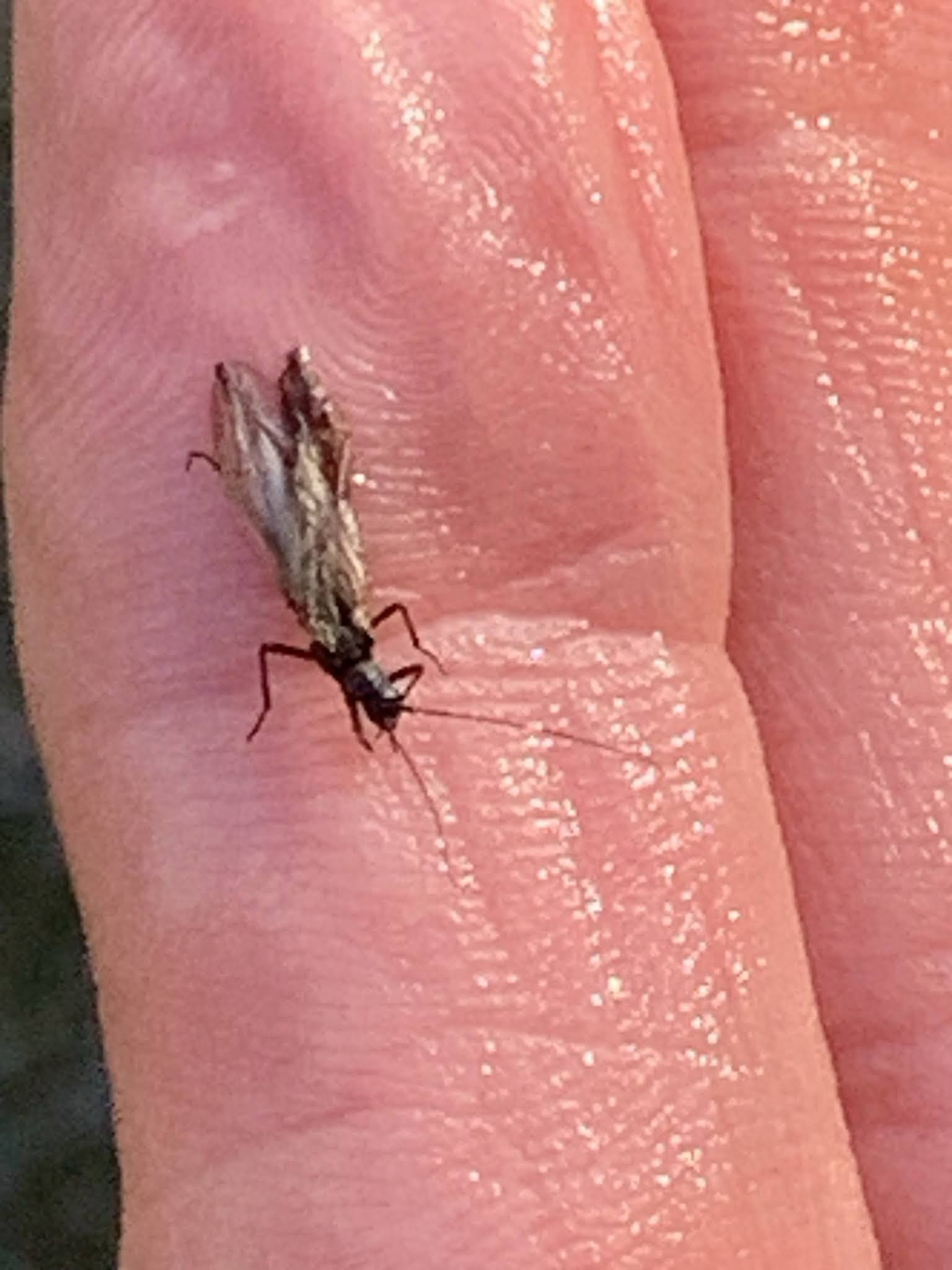
The Little Black Stonefly hatch is probably one of the best-kept secrets in north Georgia during the winter. Often these insects are very small, dark, and are hard to be seen flying in the air. One of the best ways to notice when these bugs are hatching is seeing them crawling on your waders or clothing. When they are active, fish gorge themselves on these bugs. There are many different patterns to mimic the Little Black Stones, but I like to keep it simple. Some of my favorite patterns would include Black Lightning Bugs, Black Copper Johns, Black Pheasant Tails, and Black Hares Ears (all in sizes 14-18).

If you turn over a rock this time of year, chances are you will see small dark-colored mayfly nymphs crawling on the underside of the rock. Typically, these are small Blue Winged Olive nymphs. These insects can be found in almost all trout streams across north Georgia during February, and just because you don’t see adults flying around doesn’t mean the fish aren’t eating the nymphs below the surface. Try patterns such as Olive Pheasant Tails, Split Case (BWO), and Mighty May Sloan Baetis nymphs, all in sizes 16-20. 

Another strong player during the colder months is an assortment of small midges. Many days, swarms can be seen dancing around near the water’s surface and can often be tough to mimic with flies. Usually, I keep it simple with my midge selection, and often I will pass on the single fish rising to midges as these fish can be very hard to fool. Having said that, there are many fish on or near the bottom of the stream that will often not pass up a small midge larvae. Of course, a heavy hitter would be the Black Zebra Midge, but some of our favorites around the area include a Root Beer Midge, Diamond Midge, and Evenson’s 2be Midge Larva in Black. These insects are much smaller, so you will want to drop down to sizes 18-22. 

February offers up some great fishing for anglers willing to get on the water. Dress for success and be sure to carry plenty of split shot to get your offerings down to where the fish are hiding. Typically, focus most of your angling time around the warmer portions of the day, this is when the fish are most active. Be sure to pack some of these patterns in your box and you will have everything you need for some successful time on the water!

Friday, January 15, 2021

Unicoi Outfitters Fishing Report - 1/15/21

www.unicoioutfitters.com

706-878-3083 Summary: It’s the middle of January and our fishing conditions are “low, slow, and chilly.” Streams are running low and clear. The good news is that they are not ice-cold, with rivers running in the 40-45 degree range. Those water temps give you a decent shot at some fish. Headwaters are running a few degrees lower and, with a few exceptions on warmer days, are a bit slower than mainstreams. As we’ve said before, match your flies to flows. Low and clear water suggests smaller eggs, rubberleg stones, or buggers as your first fly on 5x tippet. Then go tiny on the dropper, with a size 18 pheasant tail, hares ear, rainbow warrior, WD-40, or Frenchie trailed behind on 6x tippet. If the water is skinny, lighten up your indicator, too, or give Euronymphing a try. Keep an eye out in soft currents for hatching blue wing olives (#20) or little black stoneflies (#18). You might be pleasantly surprised by an hour of dry fly action on warm afternoons. If you don’t have a dry stonefly, grab a black or gray elk hair caddis, press down, and give it a mohawk haircut. The long, slim profile should fish well. Here is Wes’ weekly hot bug list: -Frenchies #16 and #18 -Black hares ear #16 -Slush eggs in pink and orange #12 -Gray RS2’s #20 Fresh angler reports follow on our longer Facebook edition. Good luck and put your health first if you go. Drive, hike, and wade carefully. And remember your best fishing friend every winter: the sun. Headwaters:

Sautee hit a White County blueline earlier this week and said: “My favorite rainbow stream produced well again. Fish were hunkered down with sub-50 degree air temps and there was no interest in my dry/strike indicator, unlike every other trip so far this year. Fish are certainly in winter mode. Nonetheless, it was a good day using a #16 tungsten bead head soft hackle hares ear. With fish hunkered down, the tungsten bead head was the key component in getting the fly down fast in front of hungry wild fish. In small stream fishing because of tight spaces due to overhanging rhododendron, you don’t always have the luxury of placing your fly far enough upstream of the spot where fish should be hanging out. That means getting your fly down in the water column quickly helps you produce more takes. Fishing is still good in high elevation, clear streams, but be in stealth mode with fast sinking flies to be most effective! “

Jimmy said: “Upon arriving at the Chattooga DH only to discover 17 other cars parked there and along the highway, Mark and I decided to go fish a beautiful, unnamed wild trout creek yesterday afternoon (14th). Considering we had bluebird skies and crystal clear water that was pretty chilly, the fishing was predictably slow. However, when you allow yourself to enjoy your surroundings, and you have it to yourself, you realize there are some things more important than "catching". The hookups we did have came on tungsten bead Prince Nymphs fished deep. “ DH: Smith has been hit or miss. Hits are by vets and misses are by rookies. Stealth, light tippets, and tiny bugs on the bottom are earning the higher batting averages. No recent reports on Tooga, except for the crowd found yesterday. It oughta fish the same as last week. Have an egg attractor within a foot of your split shot and drop a little pheasant tail 12-18” off the back. Consider putting a small tin split shot on the tippet between the two flies to get that dropper down, too. Try a #4 or 6 Dinsmore. Rabunites call this winter technique the “Dinsmore split.” Hunter tried the Ami and gave a truthful report:” Hey the newbies gotta know that even fishing guides have slow days, too! It was a tough Sunday on the Ami. Caught one in the first few minutes around 11:00 then nothing for the next few hours. Didn’t get a water temp for you though. The first one ate a black rubber leg stone. When the sun did manage to hit the water though there was a fair amount of midges coming off but no takers on any midge pattern in any life cycle form. Still good to be on the water though.” Smithgall:

RonW checked in: “Moe and I met up at Duke's on Saturday 1-10 to socially fishstance after snagging two spots the day before. We got into the fish almost immediately. A few on a tungsten BH CDC nymph. A few more came on the egg. We worked all the "passed up" water most of the day and it paid off big time. We spotted a few fish from up above the water and then went in and caught them, which is always super rewarding. The breakfast of champions was on the menu all day. biggest fish landed was 19" and few more in the 16-17" range. Great times as always on the water!”

Landon snatched a Wednesday no-show slot at lunchtime and reported:” Slow til about 3 when I had fished up to there. Then found ‘em wedged in a honey hole like cordwood. Broke off a couple, but landed quite a few in an hour there. Fly didn’t matter. They ate “5 shot and a good drift” in the deep pools. They were glued to the bottom and the ones I saw eat didn't move but a couple inches. Typical winter fishing.” Private waters:

UO manager Jake’s report: “Fished Nacoochee Bend on Sunday afternoon with new anglers, Sam and Brock. It was a cold day, but the fish became active once the sun was high in the sky. We were into fish consistently, but the highlight of the day was Brock’s big rainbow which had Hardman Heritage Trail hikers stopping to watch the battle. Brock’s big fish drug us up and down the river a few times, but he remembered his coaching lessons we covered during the beginning of his Gilligan Special and was able to get his trophy in the net. We landed fish on a variety of different patterns including Prince Nymphs, Soft Hackles, bigger stoneflies, and Rainbow Warriors.”
Stripers:

HenryC sez: “Stripers are eating a little better now. Both north and south lake are showing fish. Birds are helpful as are coves that are a tad warmer than the main lake or creek. Small flies are the ticket and early and late in the day is best with PM having a slight advantage. Look for fish under birds as well as in the backs of the creeks and coves.”
https://www.henrycowenflyfishing.com/ ‘21 Rendezvous canceled: All friends of the Rabunites should note that their annual winter shindig at Dillard House will take this year off to protect everyone’s health: https://www.facebook.com/rabuntu/ Good luck this week, whether you’re home perfecting your Oreck eggs, taking notes from Orvis podcasts, or carefully heading astream for some mental health maintenance. Call or come by the Helen or Clarkesville store if we can help you stay afloat in today’s turbulent times.

Monday, August 3, 2020

The River Bass Box


The River Bass Box
By Jeff Durniak

The dog days of summer are here.  That means the lengthy rains of spring are long-gone and we simply have to deal with occasional, pop-up thunderstorms.  While those brief storms might muddy-up flowing waters, they usually clear quickly.  That’s great news for our best bet during the dog days: river bassin’!   While a lot of anglers complicate things, river bassin’, at its roots, is really simple and easy.   For new fly fishers, you can enjoy your own Huck Finn days with any old 5,6, or 7-weight fly rod, wading shoes or a canoe/kayak, and a basic bass box.   I’ll tell you the goodies I carry in my box.

That basic box is a simple 3 X 2 concept of water layers and fly patterns.  I’ve got three layers of water to cover (top, middle, and bottom) and two flies per layer, my go-to pattern, and a backup bug.  Only two, you say?  Yep, for a starter box.  Pick the bug size to match your local quarry.  If you need a size to start, buy or tie these on size 4 hooks.  Of course, we can add more bugs and make that box bigger.  That’s what fly fishing is all about, lotsa cool trinkets, right?  But for new fly-flingers, a ton of trinkets isn’t necessary.  Sometimes it’s counterproductive, as noobs spend more time changing flies than casting their first pick into a good spot and working it seductively.  Remember this: Technique trumps Pattern!

Now let’s get to the gotta-have patterns. First, for the surface, I like a white Kent’s Stealth Bomber and a white popper.  They both must have lots of long rubber legs!  Toss the Stealth Bomber into low, clear water along shady banks, and don’t move it. Just let it drift along.  Every now and then, give it a slight twitch to wiggle the legs, then let it drift again for 5-10 feet.  River bass and bream are spooky in summer’s low, clear water, but they’re very hungry and love to hang out under tree limbs, waiting for terrestrial bugs to lose their footing. Fish with patience and you’ll be rewarded.  The backup surface bug is the trusty white popper. Use it to call fish up from deep, fast, or slightly discolored water.  Don’t pop it as much as you did in the spring when the water was cooler.  Pop and drift, then repeat. Use these two surface bugs in the shade and shadows of dawn, dusk, and shaded banks, where your quarry feels safe enough to “look up” for supper and not be a meal for a heron.

When they’re not looking up, go down for the fish.  You can start at mid-column with either the Clouser minnow or the greatest fly of all time, the black woolly bugger.  Fish the Clouser like a nervous minnow.  Cast, let it sink a bit, and retrieve it back to you with erratic strips.  Don’t fall into the bad habit of a constant retrieve.  You’ll catch more fish when they think their lunch is leaving!  You can fish the bugger any way at all: cast upstream and twitch down to you, then twitch slightly as it swings past you and hangs in the current below you, then twitch and strip it back to your rod tip.  One hint: put your rod tip right on the water surface while you’re twitching and stripping.  Striking fish will encounter a tight line and result in more hookups.  Strikes on high rods just pull on a big U-loop of slack – and you’ll have lots of misses.

When your shoalies and smallies are glued to the bottom, especially in the high sun, go knock on den doors and offer them a lobster dinner.  Dens are boulder fields, rock ledges, and logjams, especially the shady side of each.  You can toss Reindeau’s Hairy Fodder upstream and bounce it on the bottom, back to you, to imitate a downstream- fleeing crayfish.  Toss it across the stream, toward the bank, and twitch it while it swings.  As it finally hangs in the current below you, stick that rod tip in the water and short-strip it back upstream.  If you’re greedy like us, tie two feet of 10lb tippet to the fodder’s hook bend and drop the woolly bugger off the back. That dual-dinner menu is hard to resist.

Hopefully, these tips will get you started on some summer fun, while you await the return of trouting in the fall.  Don’t forget a big hat, sunscreen, bug spray, flashlight, plenty of water, and a good fishing buddy (at a distance) for river safety.  Toss one of these six bugs in the right spot, work it like the natural food, and hold on. These river bass have bad attitudes and broad shoulders! And they’ll make you smile in the summer sun.

Author’s Note:  Jeff Durniak recently retired as DNR’s Regional Fisheries Biologist for North Georgia.  He now spends his time terrorizing fish and working his hobby job at Unicoi Outfitters. 

Wednesday, April 15, 2020

The Best Fly You May Have Never Used

Jeff “Dredger” Durniak

Unicoi Outfitters


Want a great pattern that’s easy to tie, easy to fish, and deadly on river predators from trout to bass?  Then sit back and enjoy the tale of “Secret Weapon #1.”

Back in my former career, our division hosted the annual meeting of southeastern wildlife agency trout biologists at Unicoi State Park.  When Trout Committee business concluded, our guests had a special treat waiting on them: guided trout fishing on local waters with some of my friends, the best volunteer fishing guides from GA Trout Unlimited.

I had paired up Missouri DNR’s Mike Kruse with The Ole Rabunite, better known as Rabun TU founder Doug Adams, for an afternoon on the Dukes Creek trophy stream. It had rained the night before and stained the stream, so they quickly departed.

When they returned to the lodge for the evening meal, Kruse sported a big smile while Adams had bug eyes nearly popping out of their sockets. The Ole Rabunite explained that Mike had laid out the big rainbows on his own, home-made fly pattern, the Mike’s Mohair Leech. He said the recipe was on his agency’s website.  Link:  https://www.missouritrout.com/mikesmohairleech.htm


We looked it up and then cooked it up ourselves. Lo and behold, it worked magically!  It was a slinky woolly bugger.  We held the secret weapon close for a while (actually a long while), and perfected its use on both stream trout and river bass; olive and small (#10) for clear water, big (#6 or 8), and black for dingy water, and huge and black  (#4) for river bass. It worked dead-drifted, stripped, and even as a dropper behind Craig Riendeau’s Hairy Fodder crawdad fly. It took credit for countless Dukes Creek trophies, hefty trout from the Southeast’s Delayed Harvest streams, upper Hooch shoalies pushing 20 inches, countless NC smallies, my first big Yellowstone Park brown, and an unexpected monster brown from the Smokies that nosed close to 22 inches.

When we were asked how we were catching our biguns, we few Rabunites in-the-know dutifully replied, “I don’t believe I said.” But, after a while, the guilt set in and we finally started fessing up. I shared the love on North Georgia Trout Online’s forum around 2007, via a post called “Secret Weapon #1.”  Soon leeches of various sizes, shades, and beadheads started showing up in fly boxes and trouting reports across north GA.

If you haven’t tried one yet, you should. And then pass it on to that rookie angler beside you. He or she will catch more fish, think you’re a Pro, and soon join your conservation army.  

If it wasn’t for the benevolence of Mike Kruse and Doug Adams, I might have missed out on this secret weapon. Instead, our trio has enjoyed it and we now pass it on to you. Give it a try, pass one to a buddy, and have some fun while you adopt and conserve your favorite “home” waters.  Good luck. Don’t forget that good buddy, armed with a net and a camera!


Monday, February 24, 2020

How To Set Up Your Reel

Sometimes we often forget there are a lot of new fly anglers out there who have never set up a fly reel. Great tutorial here from Orvis.


Monday, January 25, 2016

Dukes Creek after the Big Winter Storm

by Landon Williams (the guy who gets to fish more than the law allows)

Did you survive Snowpocalypse 2016?! Hopefully so and were able to get out and enjoy the decent weather we had Sunday. I took advantage of some poor but probably warm soul’s no-show slot at Dukes creek yesterday afternoon and had a great day. Water was running at a normal winter flow but was very balmy with the recent winter weather. Still, fish have to eat and if you were persistent and patient, good fishing was one’s reward. I practiced what I always preach and found the Sun and the fishing was much improved for my angling trio compared to the poor reports I heard from the ice filled morning. Mop Flies took their fair share of fish from the others in my group but I did best with an 18 hares ear soft hackle trailed behind a small egg. Fish were hugging bottom and getting it in their face was key. My weight ranged anywhere from 3 BB split shot to two 3/0 water gremlins 
dep
ending on the depth and current speed of my fishing locale. Long fluorocarbon leaders were key to punching through current and delivering tasty morsels to the resident fish.
It was a fairly normal angling day for the winter time but believe it or not, I caught more fish on the soft hackle than I did anything else.  A slow deliberate raising/lowering of the rod at the end of the drift was deadly and even fooled a couple of nice sized “PHD” trout too! If you didn’t get outside yesterday and instead opted to watch Carolina’s clinic against the Cardinals or Peyton VS Brady, at least know that your opportunity was there!

See you on the creek!
Landon

Monday, March 16, 2015

Unicoi Outfitters Recognized as Gold Level Business Member

We know, we know.  This IS The Liars Club.  But this is real and it's a very big deal for us.  It just goes to show that any and all of us can make a difference if it's important enough.  Thank you to Trout Unlimited and to all our customers who have made our support of cold water conservation a possibility.

By Walt Gasson
One of the great things about conservation is that while on the surface it’s about fish and fish habitat, at a deeper level it’s about people. It’s about people who care. And in conservation, as in life, you soon learn that there are people who will never let you down. These are the reliable supporters, the people that always have your back financially and politically. They come from all over the country and from all walks of life. These “go to” guys and gals – the “A Team” - will be there to support the work that Trout Unlimited does year in and year out. So it is with Jimmy Harris and David Dockery and their staff at Unicoi Outfitters in Helen, GA - our newest TU Gold Level Business member.
Consider these words from Alan Folger, TU Veterans Services Partnership Director: “Few individuals have done more to provide healing and rehabilitation to our nation’s veterans.  Whether through their personal and business generosity - or their very important fundraising efforts, Jimmy  and David have always been there for TU and our veterans. Or this testimonial...click here to read the entire article.