Unicoi Outfitters is north Georgia's premier guide service and fly fishing outfitter, located on the Chattahoochee River near alpine Helen. Look for fishing reports, gear and book reviews, and general musings here from our staff and guides.
Showing posts with label Delayed Harvest. Show all posts

Wednesday, February 3, 2021

Classic Winter Standbys

Classic Winter Standbys

by Jake Darling

Unicoi Outfitters
Winter trout angling can be very productive for anglers willing to brave the elements. During this time of year, many anglers have put away their tackle, waiting on warmer days of spring to venture back on the water. The truth is, winter in Georgia is one of the best times of the year to be on the water for trout fishermen, as angling pressure is at its lowest, and fish are still feeding during the warmer hours of the day. One thing many anglers struggle with is fly selection:  sure, most biomass found in rivers during colder months is often smaller and darker, but there is more to the story than just that. Understanding available food for trout during the winter will help you have more successful days on the water. 

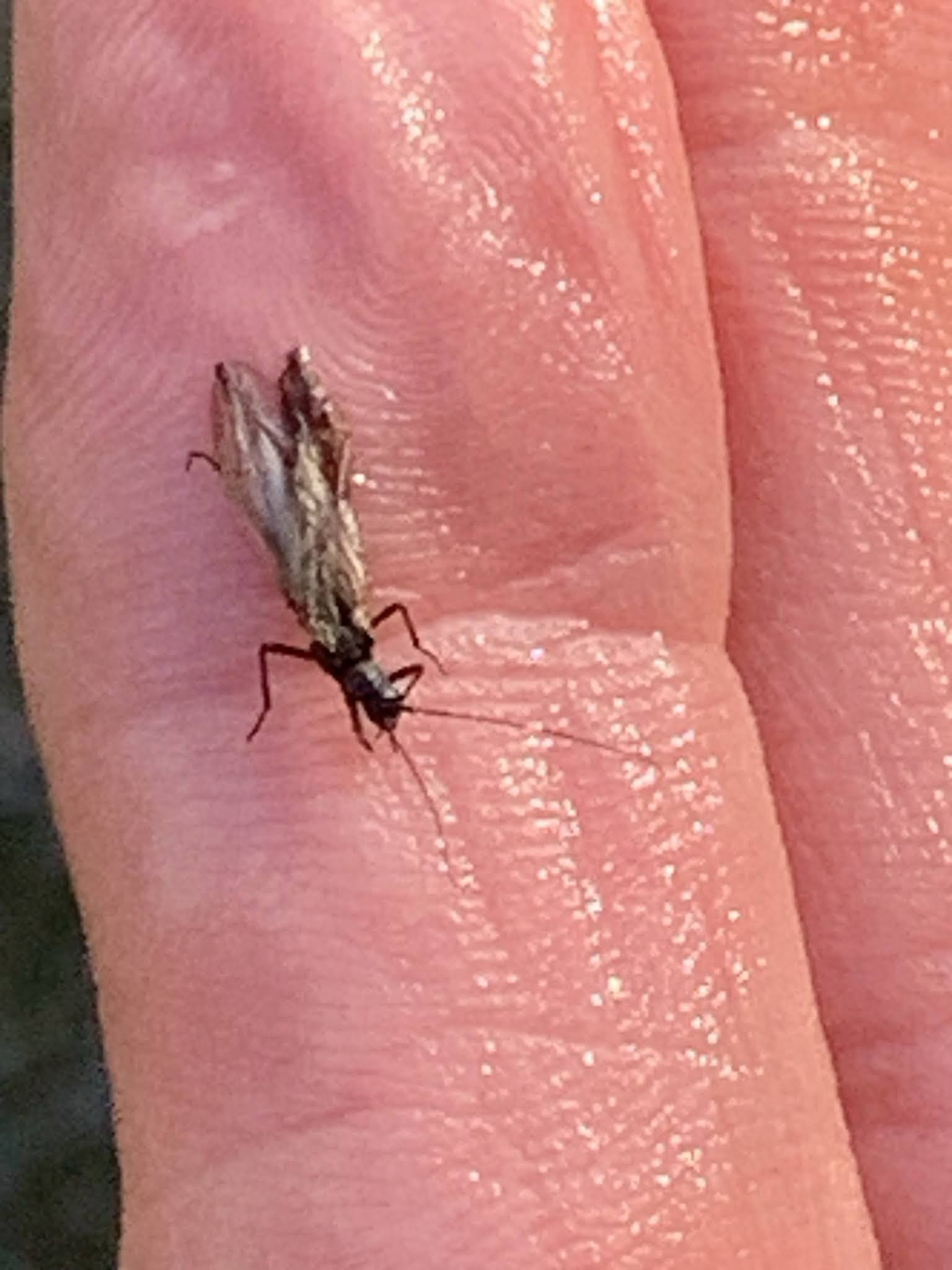
The Little Black Stonefly hatch is probably one of the best-kept secrets in north Georgia during the winter. Often these insects are very small, dark, and are hard to be seen flying in the air. One of the best ways to notice when these bugs are hatching is seeing them crawling on your waders or clothing. When they are active, fish gorge themselves on these bugs. There are many different patterns to mimic the Little Black Stones, but I like to keep it simple. Some of my favorite patterns would include Black Lightning Bugs, Black Copper Johns, Black Pheasant Tails, and Black Hares Ears (all in sizes 14-18).

If you turn over a rock this time of year, chances are you will see small dark-colored mayfly nymphs crawling on the underside of the rock. Typically, these are small Blue Winged Olive nymphs. These insects can be found in almost all trout streams across north Georgia during February, and just because you don’t see adults flying around doesn’t mean the fish aren’t eating the nymphs below the surface. Try patterns such as Olive Pheasant Tails, Split Case (BWO), and Mighty May Sloan Baetis nymphs, all in sizes 16-20. 

Another strong player during the colder months is an assortment of small midges. Many days, swarms can be seen dancing around near the water’s surface and can often be tough to mimic with flies. Usually, I keep it simple with my midge selection, and often I will pass on the single fish rising to midges as these fish can be very hard to fool. Having said that, there are many fish on or near the bottom of the stream that will often not pass up a small midge larvae. Of course, a heavy hitter would be the Black Zebra Midge, but some of our favorites around the area include a Root Beer Midge, Diamond Midge, and Evenson’s 2be Midge Larva in Black. These insects are much smaller, so you will want to drop down to sizes 18-22. 

February offers up some great fishing for anglers willing to get on the water. Dress for success and be sure to carry plenty of split shot to get your offerings down to where the fish are hiding. Typically, focus most of your angling time around the warmer portions of the day, this is when the fish are most active. Be sure to pack some of these patterns in your box and you will have everything you need for some successful time on the water!

Friday, October 31, 2014

Georgia's Delayed Harvest Streams Open Saturday November 1st

Fall Offers Great Georgia Trout Fishing Opportunities - Delayed Harvest Streams Open Nov. 1
Today's feature comes to us from the Georgia Wildlife Resources Division.
GAINESVILLE, Ga. -- Are trout streams calling you to go fish Georgia? Beautiful weather and fantastic scenery await you in the northern part of the state and beginning on November 1, fishing on five delayed harvest trout streams will open, according to the Georgia Department of Natural Resources' Wildlife Resources Division.

Trout streams are designated either seasonal or year-round. "Five year-round streams are managed under special regulations called Delayed Harvest," said John Lee Thomson, Wildlife Resources Division trout stocking coordinator. "The 'DH' streams have special catch-and-release regulations from November 1-May 14, and are stocked monthly by WRD and our partner, the U.S. Fish and Wildlife Service. This combination of stocking and catch/release allows for good trout catch rates and high angler satisfaction."

The five trout streams managed under delayed harvest regulations are:

  • Toccoa River located on U.S. Forest Service land upstream of Lake Blue Ridge in Fannin County (from 0.4 miles above Shallowford Bridge to 450 feet above the Sandy Bottom Canoe Access).
  • Amicalola Creek on the Dawson Forest Wildlife Management Area (from Steele Bridge Road downstream to Georgia Hwy. 53).
  • Smith Creek downstream of Unicoi Lake (Unicoi State Park).
  • Chattahoochee River in Atlanta (Sope Creek, downstream of Johnson Ferry Road, downstream to the Hwy 41 bridge).
  • A portion of the Chattooga River (from Ga. Hwy. 28 upstream to the mouth of Reed Creek) on U.S. Forest Service land bordering South Carolina.


"Remember, during delayed harvest, anglers on these five streams also are restricted to artificial lures with one single hook," Thomson adds. "When May 15rolls around, the general regulations to designated trout water apply."

In addition to the excellent fall fishing opportunities that these delayed harvest streams provide, other Georgia streams offer ample year-round trout fishing. These streams are:

  • Noontootla Creek Watershed: This watershed offers high-quality, year-round fishing for wild brown and rainbow trout, with many of its tributaries offering a chance at a wild brook trout (a real plus since most other brook trout waters are closed to fishing after Oct. 31). Both Noontootla and its tributaries are managed under an artificial lure only regulation and have a 16" minimum size limit in order to "recycle" the 8"-12" trout that make up most of the population.
  • Dukes Creek: This stream, located on the Smithgall Woods-Dukes Creek Conservation Area, offers year-round trout fishing by reservation (706-878-3087). All fish caught here must be released immediately and anglers can only use artificial lures with barbless hooks. The stream offers a great chance at a trout over 20 inches, so bring your camera for a quick shot before release. Best time to fish is after a rain muddies the water.
  • Chattahoochee River: For good trout fishing close to metro Atlanta, the Chattahoochee River downstream of Buford Dam offers family-friendly, year-round fishing for stocked rainbow and wild brown trout. The Chattahoochee River National Recreation Area parks offer good bank, wading and boating opportunities. The river will be stocked through the fall months to keep angler catches high. Year-round harvest is legal from Buford Dam to Sope Creek. Anglers should note that there is an artificial lure only section between Ga. Hwy 20 and the Medlock Bridge Boat Ramp. Best fishing is at low flow when the river is clear to slightly stained.

  • Some additional notable year-round trout streams include the Toccoa River downstream of Lake Blue Ridge, Tallulah River and the Chattooga River.


Anglers must possess a current Georgia fishing license as well as a trout license to fish for these beauties. By purchasing a license as well as fishing equipment and related items, you and your fellow anglers have helped fund sport fish restoration programs for years, thanks to the Sport Fish Restoration Act. This Act allows funds accumulated from a federal excise tax on fishing equipment and related items to be directed to activities that benefit recreational anglers. A portion of these funds is provided to the Georgia Department of Natural Resources based on several factors, including the number of paid sporting licenses. Sport Fish funds make the following activities possible: managing sport fish populations, raising freshwater fish in hatcheries and stocking them in public waters, maintaining and operating public fishing areas and building boat ramps and fishing piers, and much more!

Where can you get a fishing license? Buy it online or find a list of retail license vendors at www.georgiawildlife.com/licenses-permits-passes or buy it by phone at 1-800-366-2661.

For free Georgia trout stream maps, trout fishing tips and other trout fishing information, visit www.georgiawildlife.com/Fishing/Trout .

Tuesday, January 28, 2014

A NEW TWIST ON DREDGING TACTICS

Landon Williams developed a new leader formula while fishing Amicolola Creek DH:

After church Sunday, I slipped off to the Amicalola to enjoy the warm day. I was greeted by 9 anglers on the water at 1 PM spread along the entire reach of the Highway 53 stretch. I walked around for a bit and talked to a few folks who reported getting skunked or only catching/ hooking one or two. I stuck waders on and was on the water by 1:45. There was a group of three guys working the long fast run 200 yards up from the canoe launch who mentioned getting skunked as I was gearing up. So, I decided that's where I was going to start. 

I tried my standard Euro-nymphing rig first there and caught a couple of fish out of the shallow pockets in the sun towards the tailout. However, I found it very difficult to get down in the heart of the fast deep water up at the head of the pool with the Euro set up, even with my dredge rig of the long 6x leader. So I decided to try something that popped into my mind. It is, in a sense, very much like Dredger's long 8 lb. leader with an indicator but maybe a bit more extreme and modeled more after my 6x euro leader. I put my reel with a floating line on and got a new 7 ft. leader (I don't think it makes a difference what) and chopped it back to the part of the tapered leader where it is about 15 lb. test. Next, I added 4 ft. of 10 lb. test mono, which is what I applied the football indicator to so it would slide up and down. 

From this stretch I made a "jam stop" of 5 overhand knots on top of each other to make a big thick part of leader. This serves two purposes, to keep the indicator from sliding all the way down. I've had it slide down before on leaders, even through knot sections. Also it allows you to easily set up the next part of the leader. I got a long 12-14 ft. section of 5x flourocarbon and made a clinch knot and slid it up over the jam stop and seated it down. At the other end, I surgeon knotted a 3 ft. section of 6x flourocarbon Trouthunter tippet. From there I did the traditional 2 fly rig with an unweighted leech and peach egg. I also put 2-3 split shot 12 inches above the first fly and kept it in place with an overhand knot between the shot and the fly. 

How did  this setup work there? Wonderfully! I hooked 19 fish in 2 hours out of that long run, all scrappy and hungry rainbows.  I've fished that run a good bit and even with Dredger's 8 lb. leader setup, it has seemed that I've had to use 4-6 split shot to get down there. Even then I felt like I could never get down deep enough in the heart of that run without making the leader ridiculously long and painful to cast. Yesterday was the first time I've ever felt like I fished that spot thoroughly well. This is a very extreme and specialized setup for limited spots but it sure worked well yesterday and maybe could on a couple spots on the Chattooga and the Toccoa DH. 


Tuesday, December 31, 2013

Fishing Downstream

“Fishing Downstream”
Report submitted by Landon Williams

Here’s a report from Sunday (12/29) that can maybe help some of you find some unpressured water and easier to fool fish on some of our year round streams. I fished a stretch of river lying about a mile below one of our Delayed Harvest streams and had very good results. The fishing was very good with the mild air temperatures and the water temperature hovered in the upper 40’s all day! The water was fairly high from the rain overnight but was gin clear and made seeing where you’re going easy.  

There was not a particular fly pattern or technique that worked any better or worse than the others but having a fly with high visibility through brightness or high contrast caught me more fish.  I mainly fished a mohair leech with a pink tail for contrast and a Walt’s worm fly with an orange thread collar behind it for the majority of the day. Fish were hugging the banks in faster pockets or the tailouts of larger pools. Subtle jigging movements through the drift produced a few extra fish in the slower pools that I believe may not have eaten otherwise.  I think the highlight of the day was finding a pod of rising fish eating a size 20 blue winged olive mayfly and tricking 3 out of the pod before they shut down!


The fishing was fun but there’s one thing I think folks can take away from this report.  Many of our DH streams have miles of water downstream that can also be fished through the winter time. Trout can’t read our static boundary lines and many end up finding themselves upstream or downstream of these points through heavy rains or hunting for new habitat.  I like two things about these stretches just out of the reaches of our DH streams. First and foremost is the solitude they provide. Sure these stretches have fewer fish but they also have far fewer people fishing them. On Sunday, I fished roughly a mile and a half of water and never saw another angler while I was enjoying all the water to myself.  My second favorite aspect of these downstream stretches is the ability to harvest fish when most of our stocked trout streams are closed for the season. It really is a handy thing to have if you are hungry for a trout supper! 

Have fun fishing this winter and see y’all on the river!


Landon


Friday, February 5, 2010

SMITH CREEK P.R. (Pre Rain) REPORT

We received this report from our friend Caleb Bagley this morning:

Wanted to let you know that Smith's fished very well yesterday. Probably brought 20 to hand fishing from 7:30-12:30, two that measured 15 and 16 inches on my rod. Went deep (got hung every fifth or sixth cast)and fairly small. A #16 bead-head flashback pheasant tail with a #20 zebra disco midge(black with yellow ribbing) dropped off the back. Three shots in front of the BHPT and 2 in front of the midge and greased the whole rig in Zink. Caught fish across the entire DH. At one point caught five fish in five cast. Great day to be on the water. Everyone I talked to said that it was slow, I think most people don't realize how deep you have to be and that it must be put in the fish's face (that's something I learned from Dredger's tips and articles). Just wanted to let you know.

Tight Lines!
Caleb

Sunday, October 18, 2009

Tuck DH Float with Julian Byrd


Julian Byrd and I floated the Tuck DH on Friday and it was a challenging day. They had just stocked about 10 days prior, so we figured it would be absolutely silly fishing. However, even with an angler/guide as skilled as ol' J-Byrd, it was still one heck of a challenge. We were trying to figure out what was going on for a while when Julian stuck his hand in the water and said, "Wow, this water feels warm". Sure enough, it felt warmer than the 60-degree air temperature we had that day. I had read of several other reports from people on NGTO saying that they had only caught a couple of fish or had caught nothing but the proverbial skunk, but you never know if the person posting is just a lousy fisherman! Of course, Friday night the temps sank to about 34 degrees and the reports from Saturday were the usual - 30 fish, 50 fish, etc. Odds are that cold weather dropped the water temps significantly and those same fish started eating every fly they came across.

If you get a chance, take a float on the Tuck with Julian or Butch. The fall weather is perfect right now, there's water everywhere, these guys know the river well and can get you on these nice and plentiful fish. Here are a few shots from the day:


David Cannon
CannonOutdoors.com

Saturday, August 22, 2009

Hot Fun In The Summertime!

This past Wednesday David Hulsey and I took Jake Moran to Noontootla Creek Farm to give him an idea of the variety of great outdoor activities available there. Jake is the Property Manager with Achasta Community near Dahlongega which has about two miles of the Chestatee River flowing right through the middle of it. Unicoi Outfitters is working with Achasta to develop a series of outdoor adventure type activities for their residents and guests that will include flyfishing classes, guided fishing trips, sporting clays and quail hunts.


The rains we've had this summer have been a true blessing for trout fishing in north Georgia and, while stream levels are low compared with fall, winter and spring flows, the early morning water temperatures are holding steady in the low to mid 60's. The exciting aspect of fishing in August is the opportunity to catch rising fish on big hopper patterns. There's not a much more exciting visual fishing experience than watching a huge rainbow swirl on a hopper, particularly when most of the rivers at this time of year are only fishing well with size 20 and 22 midges. Man, you can SEE a hopper out there! As you can see from the photos, Jake had a good morning at The Farm.

We had a fantastic lunch at nearby VanZandt's Store. If you've fished the Toccoa River in the Dial community area, you're familiar with VanZandt's. It's actually been in business since 1834, long before the area was a playground for trout anglers, canoeists, hikers and bicycle riders. Manager, Greg Johnson has totally renovated the interior of the old store and offers up some rib-sticking meals with excellent chicken salad, stuffed baked potatoes and homemade pies. Take it from an expert, his chocolate pie will make your eyes light up and your tummy say howdy! When the Delayed Harvest season kicks off on November 1st, treat yourself to lunch at VanZandt's Store. Greg is also an accomplished fly fisherman and even has a few leaders, tippet spools and flies in stock just in case you find yourself on-stream without them.